If you’re dealing with rust stains in a toilet, the best approach is to use rust-specific cleaners that target mineral buildup with minimal scrubbing. This guide highlights select products designed to prevent or remove rust and iron stains without damaging plumbing. It covers convenient tablet formats, spray gels, and powder blends, so you can choose what fits your cleaning routine and household needs. The table below summarizes five top options chosen for practicality and clear, product-specific use cases.
| Product | |||
|---|---|---|---|
| Iron OUT Automatic Toilet Bowl Cleaner Tablets | Tablet | Toilets with ongoing rust prevention | Prevents rust with every flush for up to 45 days |
| Iron OUT Rust Stain Remover Spray Gel | Spray Gel | Hard-to-reach rust stains in bathrooms and kitchens | Clings and dissolves rust stains on contact |
| Iron OUT Powder Rust Stain Remover | Powder | Versatile rust stain removal and prevention | Strong rust stain removal across multiple surfaces |
| Rust-Oleum RustGuard Rust Stain Remover | Tablet/blocks | Toilets of both white and colored types | Prevents rust with every flush, versatile for plumbing compatibility |
| Rust-Oleum Whink Rust Stain Remover | Liquid remover | White toilets, sinks, and colorfast fabrics | No-scrub formula to break down iron stains |
Now let’s examine five top-rated options in detail. Each product section explains who it’s best for, why it stands out, and a practical caveat to consider before buying.
Iron OUT Automatic Toilet Bowl Cleaner Tablets

- Best for ongoing rust prevention: The tablets continuously prevent new rust stains with each flush for up to about 45 days.
- Better for hands-off maintenance: Ideal for households seeking a low-effort rust control strategy.
- Limitation: Requires placement in the toilet tank; effectiveness depends on regular flushes and water conditions.
These tablets are formulated to be gentle on internal toilet components while delivering a rust-preventive clean. They are especially useful for bathrooms with hard-water or iron-rich water supplies, and they pair well with a bowl-cleaning routine that addresses existing stains first with a separate rust remover.
Iron OUT Rust Stain Remover Spray Gel

- Best for spot cleaning: The gel clings to vertical surfaces and reaches difficult areas, like corners and under rims.
- Better for targeted stains: Effective on rust rings around fixtures, showers, tubs, and sinks.
- Limitation: Heavy staining may require repeat applications for complete removal; rinse as directed to protect septic systems.
The spray gel is designed for quick contact with stubborn rust stains. It’s suitable for homes that prefer a spray-on solution for hard-to-reach spots and a faster turnaround between cleanings.
Iron OUT Powder Rust Stain Remover

- Best for multi-surface use: The powder is versatile for bathrooms, kitchens, laundry, appliances, and outdoor areas.
- Better for heavy-duty rust stains: Highly effective on tougher mineral deposits that scrubbing struggles with.
- Limitation: Powder form can be messier to measure and apply; follow directions to avoid overuse.
Powder formulas excel in broad applications beyond toilets, making this option appealing to households needing a single rust remover for multiple spaces and surfaces.
Rust-Oleum RustGuard Rust Stain Remover
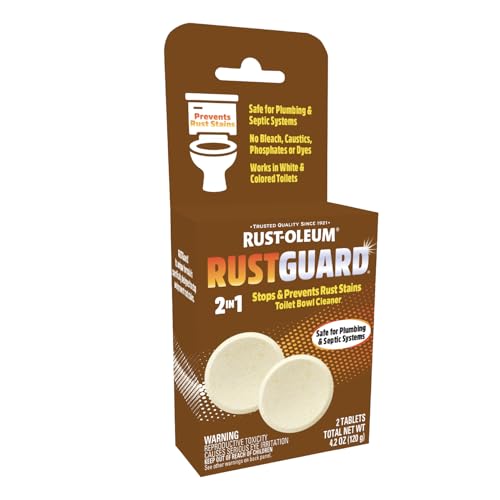
- Best for mixed-use: Works in white and colored toilets and helps prevent hard water buildup with every flush.
- Better for routine maintenance: The formulation targets rust while supporting long-term cleanliness in bathroom fixtures.
- Limitation: As with other tablet-based products, ongoing use is needed to maintain rust prevention.
RustGuard is designed for households wanting a dependable, all-in-one rust management product that works with different toilet colors and plumbing setups.
Rust-Oleum Whink Rust Stain Remover
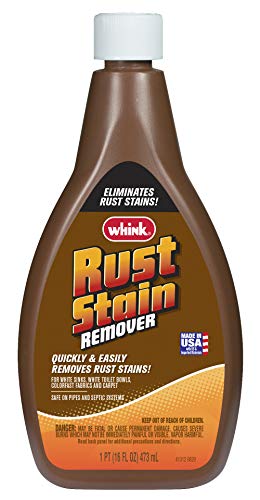
- Best for quick, low-effort cleaning: The liquid formula breaks down iron and rust stains with minimal scrubbing.
- Better for sensitive surfaces: Marketed for white toilets, sinks, and colorfast fabrics, with low odor.
- Limitation: It’s a liquid solution; staining and cleanup practices should align with surface types to avoid damage.
Whink is suitable for households seeking a straightforward liquid remover that can tackle stains across multiple bathroom and laundry surfaces without vigorous scrubbing.
Buying Guide
Before choosing a rust stain remover for your toilet, consider the following practical questions and criteria:
- What surface will you treat most often? If you need frequent bathroom rust prevention, a tablet program (like Iron OUT) may be best. For sporadic, targeted stains, a gel or liquid remover could be preferable.
- Do you prefer a multi-surface approach? Powder formulas typically offer broader use beyond toilets, useful for kitchens and laundry areas as well.
- Is odor and septic safety important? Look for products labeled as low-odor and septic-safe to fit sensitive households or septic systems.
- Are you addressing hard water or iron-rich water? Rust and mineral deposits are common with hard water; a product designed to prevent buildup with every flush can reduce recurring stains.
- Do you want a maintenance plan or a one-time stain removal? Tablets provide ongoing prevention, while gels and liquids are easier for quick stain removal.
How to choose the right product
Match the product’s action to your cleaning habit. If you want ongoing rust prevention with minimal effort, choose a tablet system. For severe stains or hard-to-reach areas, a gel or liquid remover may offer faster results. For families needing versatility across multiple surfaces, a powder or multi-surface formula can simplify purchases.
Usage tips for best results
- Follow label directions precisely to protect plumbing and septic systems.
- Clear existing rust stains with a targeted cleaner before applying preventive tablets where recommended.
- Rinse surfaces after treatment to prevent residue buildup and ensure surfaces remain clean between cleanings.
FAQ
- Q: Can I use these rust removers on colored toilets? A: Yes, some products like RustGuard are designed for both white and colored toilets, but always check the product label for surface compatibility.
- Q: Do rust stain removers require scrubbing? A: Some products claim no scrubbing, especially gels and liquids; others may need light brushing for stubborn stains.
- Q: Are these products safe for septic systems? A: Many are marketed as septic-safe when used as directed, but verify the label for your specific product.
- Q: How often should I use rust-preventive tablets? A: Tablet-based products typically last for several weeks to months; follow the package guidance for interval replacement.
- Q: Can I use these products on other household stains? A: Some powders and gels are multi-surface, but always test on inconspicuous areas first to avoid damage.
- Q: Which product is best for hard-to-reach stains? A: Gel cleaners are often preferred for vertical surfaces and hard-to-reach areas because they cling to stains.