Answering the needs of managers, janitorial teams, and facility staff seeking robust cleaning power, these large vacuums are designed for commercial settings. The top picks cover bagged and bagless designs, high-capacity bags or tanks, and versatile tools for carpets, hard floors, and upholstery. Best suited for high-traffic areas like offices, hotels, schools, and retail spaces, these machines balance weight, suction, and maneuverability to fit busy maintenance routines. Below is a quick comparison of the five most relevant options.
| Product | Type | Key Benefit |
|---|---|---|
| Oreck Commercial XL Vacuum Cleaner | Bagged Upright | Lightweight, strong agitation for carpets |
| Bissell Commercial BGU1937T Pro Cup | Bagless Upright | Large Pro Cup filter, versatile on-board tools |
| Sanitaire SC679K Tradition Upright | Bagged Upright | Long motor life, large-capacity bag |
| Shop-Vac 5-Gallon 4.5 HP 3-in-1 | Wet/Dry/Upholstery | 3-in-1 cleaning with large tanks |
| Sanitaire Force Upright SC5845D | Bagless Upright | Wide cleaning path, HEPA filtration |
Oreck Commercial XL Upright Vacuum

Best for lightweight, repetitive cleaning tasks in large carpeted areas. The Oreck XL weighs about 9 pounds, making it easier to carry between rooms or up stairs. It includes a high-speed brush roll and side edge brushes, which improve edge cleaning and deep carpet agitation. This model is well-suited for maintenance teams that want low fatigue during daily vacuuming and straightforward, reliable operation. A potential limitation is the reliance on a bagged canister system, which may require more frequent bag changes in very high-use environments.
Bissell Commercial BGU1937T Pro Cup Bagless Upright

Best for environments prioritizing low ongoing consumables and higher-capacity filtration. The Pro Cup bagless design reduces replacement bag costs and uses washable filters to sustain performance. It ships with a complete on-board tool kit (crevice tool, dusting brush, upholstery tool, extension wand) to tackle edges, upholstery, and tight spaces. Choose this if you want easy access to tools during cleaning and reduced disposal costs. A note: bagless systems may require more frequent filter maintenance in very dusty facilities.
Sanitaire SC679K Tradition Upright
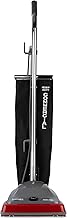
Best for professionals seeking extended motor life and high-capacity bags. This model emphasizes durability with a robust polycarbonate hood designed for tough environments and a large shake-out bag capacity of up to 18 quarts, reducing interruptions during long cleaning sessions. It is a strong candidate for busy facilities requiring dependable daily performance. Caution: heavier weight and bulk may impact maneuverability in tight spaces.
Shop-Vac 5-Gallon 4.5 Peak HP 3-in-1

Best for facilities needing wet/dry flexibility and a single unit for multiple tasks. The 3-in-1 model combines vacuuming, water extraction, and upholstery cleaning in one device, with a 5-gallon debris tank and a 4.5-liter clean-water tank. It supports carpet, upholstery, and car detailing tasks. Limitations include the need for careful module usage when switching between wet and dry modes to avoid cross-contamination.
Sanitaire Force Upright SC5845D

Best for large-area commercial cleaning with advanced filtration. The SC5845D features a wide 15-inch cleaning path that covers more floor area per pass, enhancing productivity in big rooms. It includes a washable HEPA filter on the exhaust for improved air quality in busy facilities. A potential trade-off is the absence of a bagless design, which may influence maintenance schedules for bag replacements in high-use settings.
Buying Guide: Key Purchase Considerations
What type fits your environment—bagged or bagless?
Bagged vacuums typically trap dust and allergens effectively and can be easier to maintain in facilities with ongoing debris. Bagless models reduce ongoing consumables but require more frequent filter cleaning and emptying. Consider whether your cleaning staff prefers disposable bags or easy-on, easy-off bagless bins in busy shifts.
How important is capacity and weight?
Large facilities benefit from higher capacity bags or tanks to minimize interruptions. Weight matters for stairs and multi-room cleaning. Lightweight models reduce operator fatigue but may compromise power in some cases. Balance capacity with portability to match your floor plan.
What about filtration and air quality?
Vacuums with HEPA or similar high-efficiency filtration help maintain indoor air quality, which is crucial in offices and healthcare-adjacent spaces. If allergies or sensitive occupants are a concern, prioritize models with certified filtration and sealed designs.
Which tools matter most for you?
On-board tools improve efficiency on edges, corners, upholstery, and stairs. Look for crevice tools, dusting brushes, upholstery tools, and extension wands that store securely on the device for quick access during tasks.
Durability and service considerations
Commercial vacuums are built for frequent use. Check motor life, housing materials, and ease of maintenance. If your facility has heavy traffic, opt for models with robust housings and simple filter/bag replacements to minimize downtime.
Maintenance and consumables
Consider replacement bag and filter costs, as well as the availability of parts and service in your area. A bit of planning for bag replacements or filter cleaning can extend the life of a machine in daily use.
Frequently Asked Questions
- What should I consider when choosing a large vacuum for business use?
Assess cleaning areas, capacity needs, filtration requirements, and the availability of on-board tools to maximize productivity and minimize downtime.
- Is a bagless vacuum better for commercial spaces?
Bagless models avoid ongoing bag costs but require regular filter maintenance. Choose based on maintenance capability and debris load.
- Do these vacuums work well on both carpets and hard floors?
Yes, many commercial uprights include adjustable or high-speed brush rolls and edge brushes to perform on carpets and hard floors. Verify suction performance and floor-type suitability for your facility.
- How important is a wide cleaning path?
A wider path (like 15 inches) reduces passes needed to cover large rooms, increasing productivity in commercial spaces.
- What maintenance should I plan for monthly?
Regularly check filters, bags or canisters, seals, and hoses. Clean brushes and remove entangled debris to maintain suction and extend motor life.
- Are there models that are easier to carry up stairs?
Yes, lighter upright models or compact canister designs reduce fatigue when moving between rooms or floors.