Answering the right buyer question: which paint brush cleaners restore brushes, remove dried paint, and keep tools reusable? This guide highlights five top options for artists, hobbyists, and DIYers. Each product is chosen for versatility across latex, oil, acrylic, and other paints, plus clear best-use scenarios. The buyer types covered include occasional crafters, serious painters, airbrush users, and studio professionals. A quick summary table below helps compare core details at a glance.
| Product | Best For | Key Benefit |
|---|---|---|
| Krud Kutter Brush-Wash Cleaner | General art and home projects | Restores stiffness and buildup |
| U.S. Art Supply Brush Cleaner 16 oz | Artists and hobbyists | Removes dried-on acrylic, oil, water-based paints |
| Green Piece Paint Brush Cleaner | Eco-conscious users | Natural, non-toxic formula |
| GENERAL’S The Masters Brush Cleaner | Brush preservation | Non-toxic, multi-paint cleaning |
| Master Airbrush Cleaner 16 oz | Airbrush users and tools | Fast-acting for airbrushes and brushes |
Krud Kutter Brush-Wash Cleaner And Renewer

Brand: Rust-Oleum. This cleaner is designed to clean and restore paint brushes and rollers. It helps remove dried paint, coatings, and residue, supporting better performance and extending tool life. It works on latex and oil-based paints, making it versatile for both water-based and oil coatings. It penetrates buildup to revive stiff and hardened bristles for smoother future applications. Best for painters who want a single solution for multiple brush types and paint finishes. Caution: Avoid contact with skin for extended periods and follow label instructions for dilution if needed.
U.S. Art Supply Brush Cleaner And Restorer – 4 Ounce

Brand: U.S. Art Supply. A compact 4-ounce bottle designed to quickly clean brushes, airbrushes, and art tools. It removes dried-on acrylic, oil, and water-based paints, helping you reuse brushes rather than discard them. This cleaner is ideal for students, hobbyists, and on-the-go artists who need a portable, effective solution. Best for quick touch-ups and small studio setups. Limitation: smaller bottle size means more frequent repurchases for large workloads.
Green Piece Paint Brush Cleaner & Restorer

Brand: Green Piece. A 100% natural, non-toxic formula made in the USA. It cleans wet or dry paint and is safe enough to use directly on hands. Works across acrylic, latex, oil, and shellac, making it a versatile option for eco-conscious buyers. It’s biodegradable and free of fumes, which makes it suitable for home studios and schools. Best for users who prioritize natural ingredients. Caution: While effective on many paints, severely hardened brushes may need longer soaking or a second treatment.
GENERAL’S The Masters Brush Cleaner And Preserver

Brand: GENERAL’S. This is a non-toxic, multi-paint cleaner designed to remove oils, acrylics, watercolors, stains, and varnishes. It provides a simple, one-step total care process to keep brushes performing like new and works on oils, acrylics, watercolors, varnishes, glazes, and most synthetic finishes. Best for artists who want a dedicated brush care routine. Caution: Not all finishes are compatible with every cleaner; test on a small area if working with delicate brushes.
Master Airbrush Cleaner
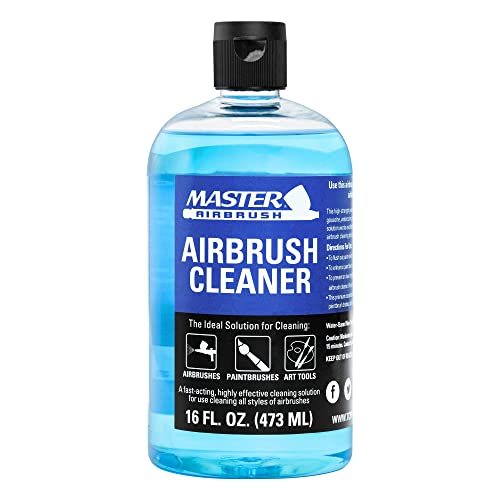
Brand: Master Airbrush. A large 16-ounce bottle designed as a fast-acting cleaning solution for airbrushes, brushes, and artist tools. It efficiently removes water-based acrylic paints, washes away makeup, and cleans makeup and cake decorating colors from applicators. Best for airbrush users and studios that require thorough flushing between color changes. Limitation: Not explicitly described for oil-based paints; use as directed for water-based media only.
X ARTY HUB Brush Cleaner

Brand: X ARTY HUB. A 32 fl oz cleaner designed for acrylic and water-based paints. It quickly dissolves paint from brushes and tools, preventing stubborn buildup. Not recommended for oil-based paints. Best for studios and classrooms using water-based media. Caution: Do not use on fully hardened brushes; for slightly dried paint, a 4–6 hour soak may be needed.
U.S. Art Supply Brush Cleaner And Restorer – 16 Ounce

Brand: U.S. Art Supply. A 16-ounce bottle intended to restore brushes with dried-on acrylic, oil, gouache, inks, and water-based paints. It also cleans airbrushes and other art tools. Best for artists who frequently reuse brushes and need a reliable all-around cleaner. Caution: Similar to other heavy-duty cleaners, use in a ventilated area and follow label directions for contact with skin.
Falling in Art Paintbrush Cleaner

Brand: Falling in Art. A 16.9-ounce bottle with large capacity for long sessions. The cleaner is described as odorless and environmentally friendly. Best for artists who want a non-irritating solvent option and long-lasting cleanings. Limitation: Not all users may tolerate its formulation if fragrance sensitivity exists; verify compatibility with your brush types before use.
Buying Guide
What to consider when choosing a paint brush cleaner
- Paint type compatibility: Look for cleaners that handle latex, oil, acrylic, shellac, and water-based paints to cover diverse projects.
- Method of use: Some cleaners are best for immediate rinsing, others require soaking. Choose based on how quickly you want results and the drying time you can accept.
- Safety and materials: Natural and non-toxic formulas are safer for hands and the environment. Consider ventilations requirements for stronger solvents.
- Brush type and size: Larger brushes or rollers may benefit from high-volume cleaners, while small detail brushes can use compact bottles.
- Release of buildup: If your brushes have dried or stiff bristles, select products designed to penetrate and soften buildup before restoration.
- Environmental impact: Biodegradable, non-toxic cleaners are preferable for home studios and schools.
Practical questions buyers ask
- Can I use these cleaners on all brush materials? Most are suitable for natural and synthetic bristles, but always check the label for fiber compatibility.
- How do I know if a brush is salvageable? If bristles return to their flexible shape after soaking and gentle cleansing, restoration is likely possible.
- Should I rinse brushes after using a cleaner? Yes, rinse thoroughly with clean water or mild soap as directed to avoid residue.
- Is a natural cleaner safer than a solvent-based one? Generally, natural cleaners reduce exposure to fumes and harsh chemicals, but performance varies by paint type.
- How often should I clean brushes between projects? Clean immediately after use to prevent buildup; deep cleans can be scheduled after heavy use or color changes.
- Which cleaner is best for artists working with multiple media? A multi-paint cleaner that handles acrylic, oil, latex, and water-based paints offers the most versatility.
Quick tips for maximizing brush life
- Always test cleaners on a small brush segment first.
- Store brushes with bristles pointing upward to maintain shape after cleaning and drying.
- Rinse thoroughly and reshape bristles before air-drying.
FAQ
- What is the best all-around brush cleaner? A product labeled for multiple paint types, such as latex, oil, acrylic, and water-based paints, generally provides the best versatility.
- Can these cleaners restore dried brushes? Yes, many cleaners include buildup penetration to improve bristle flexibility and extend tool life.
- Are natural cleaners as effective as chemical ones? Natural cleaners are safer and eco-friendly, but performance depends on paint type and level of buildup.
- Should I use a separate cleaner for airbrushes? Airbrush cleaners are formulated to flush tightly packed passages and should be used for that purpose; reserve brushes for brush cleaners when possible.
- Is soaking necessary for stiff brushes? Soaking times vary; slightly dried paint may require 4–6 hours for effective softening before removal.
- What safety practices should I follow? Use in a well-ventilated area, wear gloves if sensitive to cleaners, and follow label directions for dilution and contact.