Answering the common question: which palm oil products work best for soap making? This guide focuses on durable, moisturizing options that help soaps lather, harden, and stay stable. The top picks are suited for soap makers, DIY crafters, and hobbyists seeking reliable, organic or sustainably sourced palm oil components. Below you’ll find five carefully chosen products, each with usage notes, best-for guidance, and practical cautions to consider when formulating soaps or related skincare items. A quick buying table is included to compare key features at a glance.
| Product | Brand | Size | Best For | Notes |
|---|---|---|---|---|
| Traverse Bay Palm Oil 32 oz | Traverse Bay Bath and Body | 32 fl oz | Small-batch soaps, moisturizing bars | Organic, sustainable |
| Traverse Bay Palm Oil 112 oz Gallon | Traverse Bay Bath and Body | 112 oz | Harder, longer-lasting bars | Kosher, premium organic |
| Palm Kernel Oil Flakes | Traverse Bay Bath and Body | 32 oz | Palm kernel rich formulations | Vegan friendly, versatile |
| Soapeauty Palm Oil RBD | Soapeauty | 32 fl oz | DIY soaps and creams | Non-hydrogenated, vitamin E rich |
| MD.LIFE Palm Oil 32 oz | MD.LIFE | 32 oz | Soap making and cooking-grade blends | Cold pressed, sustainable |
Traverse Bay Palm Oil — 32 Fl Oz

Best for small-batch soap makers and hobbyists who want a pure Palm Oil base to improve hardness and lather. The product emphasizes organic and sustainable sourcing, along with an enhancement in soap texture and cleanse. This size is ideal for experimenting with new recipes or limited runs. Caution: verify organic certifications for your specific use-case if required for labeling.
Traverse Bay Palm Oil — 112 Oz Gallon

Best for larger batches and bars intended to be longer-lasting. The gallon size is suitable for frequent soap makers or studios needing consistent supply. It’s described as premium organic palm oil with sustainable sourcing, aiding in soap hardness and skin conditioning. Caution: bigger packaging requires storage in a cool, dry place to maintain quality.
Palm Kernel Oil Flakes 32 Oz

Best for formulations seeking a different lipid profile or a vegan-friendly option to alter soap texture and lather. Palm kernel flakes come from the kernels of the oil palm and can complement palm oil in blends. Limitation: flakes may require careful handling and accurate measurement in recipes to avoid phase separation in some formulations.
Soapeauty Palm Oil RBD — 32 Oz

Best for DIY soaps and creams requiring 100% palm oil without hydrogenation. Rich in vitamin E and processed as refined, bleached, and deodorized (RBD) palm oil. Choose this if you need a neutral oil that blends easily with other ingredients. Caution: the product description is concise; verify fiber and labeling requirements if you plan to market soaps with specific claims.
MD.LIFE Palm Oil — 32 Oz
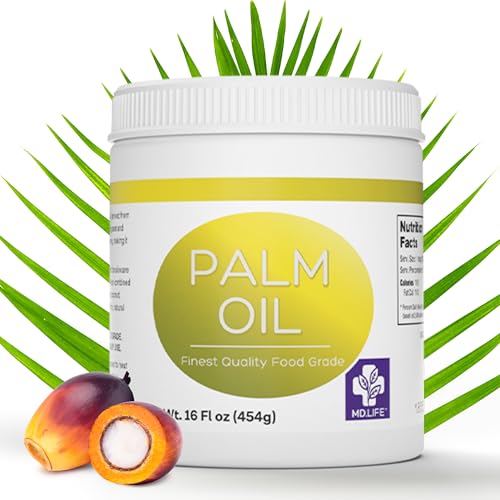
Best for formulations needing cold-pressed, sustainable palm oil with fatty acids and beta carotene benefits. The product highlights its suitability for soap making, cooking, and skin care uses. Caution: detailed processing steps are not listed; ensure compatibility with your soap base and fragrance plan before large-scale use.
Buying Guide: Palm Oil For Soap Making
What to consider when selecting palm oil for soap making:
- Source and sustainability: Look for organic, Kosher, RSPO certified, or otherwise sustainably sourced options to align with ethical and branding goals.
- Form and processing: Cold-pressed, refined (RBD), and kernel variants affect texture, scent, and cleansing properties. Choose based on your formulation needs.
- Fatty acid profile: Higher saturation tends to yield harder bars with longer shelf life; blends with palm kernel oil can adjust lather and creaminess.
- Purity and additives: Some products are marketed as food-grade; ensure the oil meets cosmetic or soap-making standards if labeling requires it.
- Storage: Temperature and light stability influence quality. Store in a cool, dry place away from direct sunlight.
- Batch size: Start with smaller quantities to test performance before scaling up to larger runs.
How To Use Palm Oil In Soap Making
In soap making, palm oil generally contributes to hardness, a stable lather, and a creamy feel. It blends with other oils to balance texture and cleansing power. Start with recommended percentages from your recipe and adjust based on your target bar characteristics. Consider combining with coconut oil for extra lather, or with olive oil for milder bars.
Common Pitfalls To Avoid
- Overheating oils can lead to acceleration in trace or scorch marks; maintain appropriate temperatures.
- Improper storage may cause oxidation; use airtight containers and avoid moisture exposure.
- Unverified labeling claims may affect compliance; verify certifications if required for product labeling.
FAQ
- What is palm oil used for in soap making? It provides hardness, stability, and a creamy lather when blended with other oils.
- Is palm kernel oil suitable for soap making? Yes, it can boost lather and impart a different fatty acid balance when used with palm oil.
- Should I choose organic palm oil for soap? Organic options support sustainability and may align with ethical branding, but ensure ingredient lists meet your formulation needs.
- What does RBD mean in palm oil? Refined, Bleached, Deodorized; it yields a neutral oil suitable for cosmetics and soaps.
- How should palm oil be stored? In a cool, dry place away from light to maintain quality and shelf life.
- Can palm oil be used for cooking and soap making together? Some products are food-grade; if you plan to use the same oil in cosmetics, confirm cosmetic-grade suitability and processing.