This guide identifies top polishing pastes and plastic restorers for vehicles and other plastics. It targets buyers seeking clear, durable results for headlights, gauges, trim, and other plastic components. The picks below cover interior and exterior plastics, with options suited for DIY enthusiasts, casual detailers, and professionals. Each product is described with who it’s best for, why it stands out, and a clear caveat if applicable. A concise buying table follows to help you compare key points at a glance.
| Product | Best For | Why Selected |
|---|---|---|
| Griot’s Garage Plastic All-in-One | All-around plastic restoration | Ceramic protection and multi-surface use |
| Meguiar’s PlastX | Headlights and clear plastic clarity | Versatile, water-resistant finish |
| Glass Polish 1.7oz GP14017 | Professional micro-finish on plastics | High-gloss finish for plastics and acrylics |
| CarGuys Plastic Restorer | Rugged interior/exterior plastic, vinyl, rubber | Long-lasting, non-greasy dry-to-touch finish |
| PFERD Plast Polishing Paste Bar | High-gloss polishing on plastic | Coordinated system for high-gloss results |
Griot’s Garage Plastic All-in-One
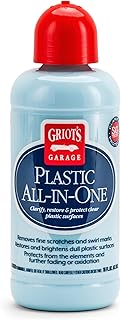
Best for: versatile plastic restoration on headlights, gauges, trim, and exterior plastics. Features include tiny abrasives to remove yellowing and light scratches, plus SiO2 ceramic and silane polymer protection for durable water-repellent shielding. This makes it suitable for vehicles, motorcycles, and boats with glossy plastic surfaces. Use on interior and exterior plastics such as B-pillars and windscreens. A note: the product aims for long-lasting protection but may require follow-up applications for heavy wear or severe oxidation.
Meguiar’s PlastX Clear Plastic Polish

Best for: restoring clarity on uncoated plastics and scratches on headlights, taillights, and plastic windows. Features include quick performance, water-resistant polymers, and a simple application suitable for various plastic surfaces. This polish helps night visibility by improving brightness and distance perception. Consider it as a primary option for frequent use on rough or moderately scratched plastics, but avoid heavy duty abrasion needs where a more aggressive compound might be necessary.
Glass Polish 1.7oz GP14017

Best for: professional-grade polishing of plastic and acrylic surfaces. Features include a micro-finish compound that restores faded plastics, removes minor abrasions, and supports high-gloss finishes. Suitable for plexiglass, fiberglass, and polycarbonate components. Choose this if you need precise, high-quality surface polish and are comfortable with detailed finishing steps. A caveat: it is a polishing compound, so follow the recommended steps for best results and avoid over-polishing delicate surfaces.
CarGuys Plastic Restorer

Best for: renewing interior and exterior plastics, vinyl, and rubber with a long-lasting finish. Features emphasize long-lasting results, rain resistance, and a dry-to-touch finish that avoids oily residue. This makes it ideal for dashboards, trim, and exterior plastics that face weather exposure. A caution: some users may prefer a more matte look on certain surfaces, as the finish can appear glossier over time.
PFERD PLAST Polishing Paste Bar

Best for: high-gloss polishing of plastic with a coordinated system that supports pre-polishing and final polishing. The bar is designed for plastics and works with cloth rings, buffing drums, and soft cloths for a complete finish. It suits professionals or enthusiasts pursuing ultimate shine on plastic surfaces. Limitation: results depend on using the proper polishing sequence and tools to avoid gouges or uneven finishes.
Buying Guide: How to Choose the Right Plastic Polishing Paste
What kind of plastic are you polishing? For headlights and rigid clear plastics, a product with abrasive compounds and protective resin or ceramic layers can deliver clarity and protection. For interior trim, look for long-lasting, non-greasy finishes that dry to the touch. Consider whether you want multi-surface versatility or a focused solution for a single surface type, such as plastic windows or gauges.
Key considerations
- Surface type: clear plastics (headlights) vs. textured trim (B-pillars, dashboards).
- Protection level: ceramic or polymer-based protection adds water resistance and longevity.
- Finish preference: high-gloss vs. more subtle, natural-looking shine.
- Ease of use: simple wipe-on formulas for DIY use vs. professional-grade pastes requiring more steps.
- Applicability: interior, exterior, or both; some products are explicitly multi-surface.
Comparison at a glance
- Best overall versatility: Griot’s Garage Plastic All-in-One for multi-surface use and durable protection.
- Best for clear plastic restoration: Meguiar’s PlastX for quick clarity gains on headlights and clear plastics.
- Best professional finish: Glass Polish 1.7oz GP14017 for micro-finish, high-gloss results on plastics and acrylics.
- Best long-lasting interior/exterior: CarGuys Plastic Restorer for a durable, dry-to-touch finish that resists rain.
- Best polishing system approach: PFERD Plast Polishing Paste Bar for a coordinated, high-gloss polishing workflow.
Usage tips
- Test on a small, inconspicuous area first to gauge compatibility and finish.
- Follow product directions regarding application thickness, curing time, and removal.
- Use appropriate pads or cloths: soft cloths for final polish, cloth rings or buffing drums for pre-polish.
- Keep surfaces clean and dry between steps to avoid trapping dust or debris that could scratch.
FAQ
- What is a polishing paste best for plastic?
A polishing paste removes light scratches and oxidation, restores clarity, and may include protective polymers for longevity.
- Can I use plastic polish on all plastics?
Yes, but verify the surface type (clear plastics vs. textured or painted plastics) and follow the product’s guidance.
- Do polishing pastes require a polishing pad?
Many do; some work with soft cloths or buffing wheels. Use the recommended pad type for best results.
- Is ceramic protection necessary?
Ceramic or polymer protection helps resist yellowing, water spots, and dullness, extending the finish.
- How often should I re-polish plastic surfaces?
Depends on exposure and wear. For high-traffic areas, reapply as needed to maintain clarity and protection.
- What surfaces are most challenging?
Very delicate coatings, smoked plastics, or surfaces with heavy oxidation may require professional refinement.