Answer: A tool-activated vacuum system synchronizes your dust collection with power tools to boost efficiency and cleanliness. This guide covers top options that suit woodworkers, hobbyists, and shop setups of different sizes. The best picks are (1) compact, auto-start/auto-stop switches for table saws and routers, (2) multi-tool outlets for cordless and corded tools, (3) central vacuum configurations for larger spaces, (4) portable shop vacs with integrated dust control, and (5) expandable hoses and adapters for versatile dust collection. Use the table below to compare the five highlighted products at a glance and identify the best fit for your workshop layout.
| Product | Best For | Notes |
|---|---|---|
| O’SKOOL PTA08 Auto Vacuum Switch | Small to mid-size shops, single-tool setups | Automatic start, 10s delay off |
| Ortis Vacuum Switch | Multi-tool setups, small business shops | Two tool outlets, three modes |
| DEWALT 20V MAX Cordless Shop Vac (DCV580H) | Cordless flexibility, portable jobs | HEPA-like filtration, 2-gallon tank |
| SENCTRL Automatic Vacuum Switch | Load-sensing power tools, DIY to pro | Auto/on/off with load-sensing 1s delay |
| Cen-Tec Systems 94709 Quick Click Hose | Versatile dust collection connections | Hose with multiple adapters for many tools |
O’SKOOL Automatic Vacuum Switch PTA08
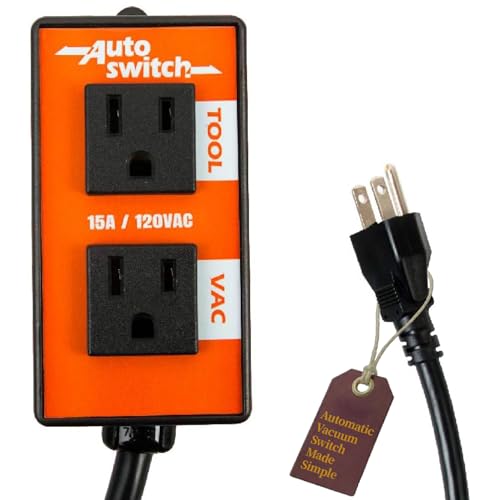
Best for: small to mid-size woodshops that rely on a single dust-collection line or compact dust system. This automatic vacuum switch engages the vacuum when the tool draws power and keeps it running for a 10-second post-use delay to clear dust from the hose. The simple setup makes it a solid choice for table saws, routers, or sanding stations where user-friendly operation matters. A potential limitation is that it relies on the tool drawing more than 30W to trigger the VAC outlet, which may exclude some low-wattage tools from automatic activation.
Ortis Vacuum Switch for Power Tools

Best for: workshops needing multiple tool outlets and adjustable auto-switching. Ortis offers two tool outlets and three modes (automatic, off, on) with auto-switching, streamlining start-up for several powered tools and the vacuum. The auto delay (1s start, 7s delay off in auto mode) helps prevent circuit overload and reduces airborne dust. Installation options include screw mounting or traceless wall-mounting adhesive for flexible placement. Caution: ensure your tool draw exceeds the 30W threshold to trigger auto-start; some very low-draw tools may require manual mode.
DEWALT 20V MAX Cordless Shop Vac (DCV580H)

Best for: cordless, portable dust cleanup with respectable power. This 2-gallon wet/dry vac includes a HEPA-rated-like filter and an easily accessible, washable filter for quick maintenance. The integrated hose and crevice tool are compatible with Airlock fittings. Best used for small cleanup tasks and tight spot work where mobility matters. Limitation: cordless operation has limited runtime depending on battery capacity and tool demand, which may require frequent recharges during larger jobs.
SENCTRL Automatic Vacuum Switch

Best for: setups requiring load-sensing control and a manual override option. SENCTRL adds a manual switch with Auto, Off, and On modes, plus a 1-second start delay and a load-based 1-second delay to the vacuum, helping manage startup surges and reduce circuit overload. This model uses a robust 14AWG cord and flame-retardant casing for durability. Caution: ensure compatibility with your vacuum’s voltage and plug type; some configurations may require adapters.
Cen-Tec Systems 94709 Quick Click 16 Ft Hose

Best for: users needing flexible dust collection connections across brands. This 1-1/4″ x 16-foot commercial-grade hose includes a broad set of adapters (¾”, 1″, 1-1/4″, 1-1/2″) and a quick-click system, making it easy to connect to various power tools and vacuums. It helps customize suction paths and reduces hose kinking with a 360-degree swivel. Limitation: hose length and diameter may affect suction at distant tools; plan for tool-to-hulk dust paths in larger workshops.
Buying Guide
What should you consider when choosing a power tool vacuum system?
- Tool compatibility: Do you need auto-start for one tool or multiple outlets for several tools at once?
- Outlets and modes: Is auto, manual, or mixed operation most important for your workflow?
- Ventilation and dust control: Will a central or portable system better handle your shop’s size and dust load?
- Power demands: Check the VAC and TOOL port power requirements to prevent overloads or nuisance tripping.
- Ease of installation: Consider whether you prefer screw mounting, adhesive mounting, or plug-and-play kits.
- Durability and maintenance: Look for flame-retardant housings, UL-listed cords, and washable filters where applicable.
- Hose and adapter compatibility: Ensure hoses fit your tools and offer enough length and flexibility for safe movement.
FAQ
- What is a vacuum switch for power tools?
A vacuum switch automatically starts the dust extractor when a tool powers on and stops after a set delay, reducing manual steps and improving dust control.
- Which setup is best for a small shop?
A compact auto-switch with a single-tool outlet, like the O’SKOOL PTA08, is often best for small shops that primarily use one major dust collector line.
- Can I use a central vacuum with power tools?
Yes, but central systems are typically more suitable for larger spaces. They require appropriate piping, outlets, and power management to prevent overloads.
- Do I need multiple tool outlets?
Multiple tool outlets suit multi-tool workshops; they reduce the need for power strips and simplify operation when several tools run at once.
- What safety considerations apply?
Ensure the system’s electrical load matches your circuit capacity and that hoses and adapters are rated for the tools in use to avoid overheating or kinks.
- Are cordless shop vacs compatible with auto switches?
Many auto switches are designed for corded tools. If using a cordless vac, verify that the switch can trigger reliably with your battery-powered tool at startup.