Hard water stains on fiberglass tubs can be stubborn. The right cleaner, applied with proper technique, can restore shine and prevent future buildup. This article highlights five effective options and practical steps to tackle mineral deposits, soap scum, and rust stains without damaging fiberglass. Each product is chosen for its performance on hard water deposits, ease of use, and safety for bathroom surfaces.
Summary of chosen products
| Product | Brand | Best For |
|---|---|---|
| Bio-Clean Hard Water Stain Remover | Bio-Clean Products | Heavy mineral stains, rust spots, glass and tiles |
| CLR Brands Calcium, Lime & Rust Remover | CLR | Multi-surface calcium, lime, rust deposits |
| Tillbrook Fiberglass Shower Cleaner | Tillbrook | Fiberglass surfaces, soap scum, hard water |
| Lime-A-Way Hard Water Stain Remover Spray | Lime-A-Way | Stubborn lime and calcium buildup |
| Lysol Power Bathroom Cleaner Spray | Lysol | Hard water stains, mineral buildup, disinfection |
Bio-Clean Hard Water Stain Remover

The Bio-Clean product is described as a professional-grade hard water stain remover designed to tackle years of mineral buildup. It is formulated as an aerosol, suitable for glass, tile/grout, and windows, with the ability to remove stains, rust, and mineral residues from multiple surfaces. When used on fiberglass tubs, apply as directed to affected areas, allow adequate dwell time, and wipe away for a clean, streak-free finish. Consider testing a small area first to ensure compatibility with the glossy fiberglass surface.
CLR Calcium, Lime & Rust Remover

CLR is a versatile cleaner designed to dissolve calcium, lime, and rust deposits. It is marketed as multi-surface, including bathroom fixtures and tiles, with fast-acting removal of mineral buildup. For fiberglass tubs, apply per label directions, rinse thoroughly, and dry to prevent streaking. Avoid prolonged contact with anodized metal fixtures and test first on decorative coatings. This product is useful when mineral buildup is extensive or when multiple bathroom surfaces require treatment.
Tillbrook Fiberglass Shower Cleaner

Tillbrook offers a fiberglass-focused cleaner designed to remove hard water stains, rust, and soap scum. The 32-ounce formula provides broad coverage and a streak-free finish on fiberglass, glass, metal, plastic, ceramic, and more. The product emphasizes non-toxic, spray-on use, making it convenient for regular bathroom maintenance and deep cleaning sessions. Always follow the dwell time and rinse instructions to avoid residual film on glossy surfaces.
Lime-A-Way Hard Water Stain Remover Spray

Lime-A-Way is a classic lime and calcium remover noted for its fast action and effectiveness on bathroom surfaces. It is designed to tackle lime deposits, calcium, and rust stains on sinks, tubs, tiles, and glass surfaces. It is not recommended for natural stone or marble. When using on fiberglass, apply evenly, let it sit briefly, then rinse and wipe clean to prevent residue. A thorough rinse helps maintain a bright, clean look.
Lysol Power Limescale Remover

Lysol Power Limescale Remover is described as a disinfecting bathroom cleaner that also tackles hard water buildup. It combines sanitizing properties with mineral removal, which can help brighten fiberglass surfaces after removing mineral deposits. Use as directed for larger areas or repeat applications on stubborn spots. Always ensure proper ventilation when using chemical cleaners and rinse surfaces thoroughly after treatment.
QONS Hard Water Stain Remover
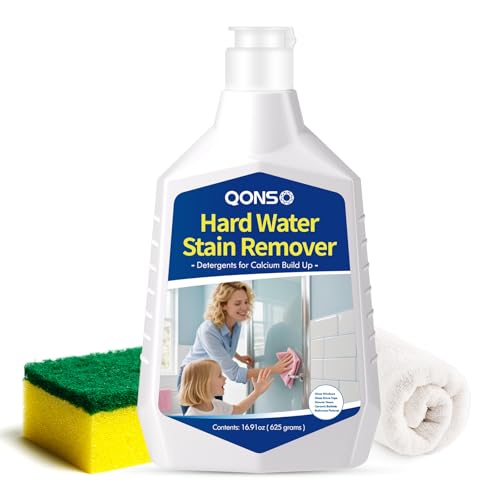
QONS offers a gray hard water stain remover paste designed to break down tough grime from glass, tile, grout, and fixtures. The paste form can be beneficial for precise targeting of stubborn spots on fiberglass tubs. Apply with a non-scratch applicator, let dwell as recommended, then rinse and wipe. Always test a small area first to avoid potential surface haze on glossy finishes.
ADIOS! Hard Water Calcium Remover

ADIOS! offers a hard water calcium remover that includes a clarifier designed to soften deposits and prevent future scale. This product is positioned for spa and pool-type environments but can be effective on bathroom fixtures, including fiberglass tubs, when used as directed. It also emphasizes stain prevention with mineral clarification to keep surfaces clearer longer. Rinse well after application to avoid film buildup.
Buying Guide: Key Considerations For Fiberglass Tub Cleaners
- Surface compatibility: Always check the label to confirm fiberglass compatibility and avoid harsh abrasives that can scratch the surface. For finished fiberglass, gentler formulations often give the best results with less risk of dulling shine.
- Stain type and dwell time: Mineral deposits vary from light to heavy buildup. Choose a product with appropriate dwell time and follow instructions for maximum effectiveness without damage.
- Safety and ventilation: Many cleaners contain active ingredients that can irritate skin or eyes. Use gloves, work in a well-ventilated area, and keep cleaners away from children and pets.
- Surface finish and appearance: After cleaning, rinse thoroughly and dry the surface to prevent new water spots. Some products may leave a faint residue; wipe clean or polish as needed for a fresh look.
- Environmental impact and odor: If odor or chemical concerns are important, look for low-odor or “non-toxic” formulations and consider eco-friendly options when possible.
- Cost and coverage: For larger tubs, a product with economical quantity or spray efficiency may offer better value. Begin with a small test area to estimate coverage and effectiveness.
- Alternative approaches: In some cases, a paste or gel formulation applied with a non-scratch applicator can achieve better control on stubborn spots. Mechanical cleaning (soft scrub brushes) can complement chemical action, but avoid rough scrubbing that could scratch fiberglass.
Note: This article provides information on commonly available products and general cleaning guidance. Always follow the specific product instructions and conduct a small patch test before full application to avoid unintended surface damage.