Teas stains on stainless steel sinks can dull their shine and create an uneven surface appearance. This guide highlights proven cleaners and methods that target tea residue, mineral buildup, and rust spots while preserving the finish. Below you’ll find five top-rated products that work well on stainless steel, along with practical usage tips and a buying guide to help you choose the right solution for your needs.
Summary Of Featured Products
| Product | Brand | Key Benefit | How It Helps With Tea Stains |
|---|---|---|---|
| Astonish Specialist Clean & Revive | Astonish Store | Foaming paste for easy stain lifting | Instant foaming action lifts ingrained tea stains without heavy scrubbing |
| HOPE’S Perfect Sink Cleaner & Polish | HOPE’S Store | All-in-one cleaner and polish | Shines and protects while removing stains on multiple surfaces |
| Weiman Stainless Steel Cleaner & Polish | Weiman Store | Top-selling stainless steel cleaner | Removes stains, rust, and mineral deposits; safe on food-contact surfaces |
| Bioclean Hard Water Stain Remover | Bio-Clean Products Store | Industrial-strength stain remover | Targets tough hard-water and mineral stains that cause tea residue shadows |
| RAVPUIA Stainless Steel Cleaner & Polish Paste | RAVPUIA | Multi-purpose paste cleaner | Cuts grease and stains, restoring a streak-free shine |
Note: This article outlines objective, user-safe methods and does not include prices. Always follow product directions and test on a small area first.
Astonish Clean & Revive Foaming Powder For Tea Stains

A Must-Have Kitchen Essential for removing tough stains from tea cups, coffee mugs, teapots, and stainless steel surfaces. The foaming action lifts ingrained tea stains without aggressive scrubbing and rinses clean. The formula is designed to reduce water spots and is packaged with sustainability in mind, featuring 80% recyclable paper packaging.
What to know: Use hot water to activate the foam, apply to stained areas, and rinse after the recommended soak time. Ideal for items that have dark tea rings or tannin buildup that standard dishwashing misses.
HOPE’S Perfect Sink Cleaner And Polish

HOPE’S Perfect Sink combines cleaning power with polishing action. This restorative cleaner shines and protects in a single step, reducing visible tea stains and leaving a smoother finish on stainless steel, cast iron, and other compatible surfaces. It is designed for efficient cleaning workflows and quick wipe-downs after use.
Weiman Stainless Steel Sink Cleaner & Polish

Weiman’s bestseller focuses on stainless steel care with an emphasis on removing stains, rust, and mineral buildup that contribute to tea ring shadows. It’s safe for contact with food surfaces after rinsing and provides a protective, streak-free shine. Regular use can help maintain a bright, uniform finish on sinks, countertops, and appliances.
Bioclean Hard Water Stain Remover

This professional-grade remover targets years of mineral deposits and hard water stains. While marketed for windows and tile, it’s effective on stainless steel when dealing with stubborn tea stains that have embedded mineral residues. Use as directed for best results and to avoid any surface dulling.
RAVPUIA Stainless Steel Cleaner & Polish Paste
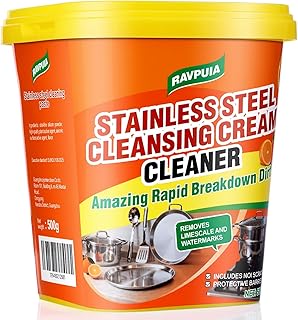
RAVPUIA’s heavy-duty paste is designed for multi-surface stainless steel care, including sinks, stoves, and cookware. The paste is formulated to cut through grease and remove stubborn stains, including tea residues, while leaving a protective, streak-free finish. It also comes with two sponges to aid in application and removal.
Buying Guide: Tea Stain Solutions For Stainless Steel
Choosing the right approach depends on the type and severity of stains, your cleaning routine, and the surface area involved. Consider these perspectives:
- Stain severity: Light tannin staining from daily tea use may respond to gentle cleaners and routine polishing, while deep mineral buildup may require stronger or repeated treatments.
- Surface compatibility: Always check that cleaners are safe for food-contact surfaces if you regularly wash dishes in the same sink.
- Application method: Foaming cleaners can lift grime with less scrubbing, while pastes offer targeted abrasion for tough stains. Soaking can reduce manual effort for heavily stained parts.
- Rinse and wipe: Thorough rinsing prevents residue and streaking. Dry the sink after cleaning to minimize water spots.
- Maintenance routine: Regular polishing and light cleaning can help prevent tea rings from forming, preserving a uniform finish over time.
- Environmental considerations: Opt for products with responsible packaging and safer chemical formulations when possible.
When evaluating options, test cleaners on a small, inconspicuous area of the sink first. Follow label directions, wear gloves as needed, and work in a well-ventilated area. If you’re dealing with persistent stains after multiple attempts, consider alternating products or using a combination approach—from cleaning to polishing—to restore a bright, even surface.