Finding the right rubber o-ring lubricant helps prevent leaks, reduces wear, and extends the life of pool, plumbing, RV, and equipment seals. This guide highlights five proven options and explains who each product is best for. The top picks emphasize non-melting, water resistance, and food-grade safety for various applications. Ideal buyers include pool technicians, homeowners maintaining pumps and filters, and DIYers replacing o-rings in wet or dry environments.
| Product | Best For | Key Benefit |
|---|---|---|
| LubeTube 4oz O-Ring Grease | Pool equipment pros and DIY pool owners | Watertight seals and easier maintenance |
| Permatex 81101 O-Ring Lubricant | Kitchen and bathroom fittings, faucets | Food-grade, broad compatibility |
| KEZE Waterproof Silicone Lubricant | Valve seals, faucets, and water-related hardware | Odorless, resistant to water and oxidation |
| Super Lube O-Ring Silicone Lubricant | Industrial and automotive O-rings | Heat stability and oxidation protection |
| (2-Pack) AR-PRO 5oz | Pool o-rings and gaskets | Teflon-based, non-melting |
Below are five detailed product profiles to help you compare quickly and choose confidently. Each entry notes the target user, why the product was selected, and one practical caveat to consider.
LubeTube 4oz O-Ring Grease

What it is: A non-sticky synthetic grease designed to stop leaks on pool filters and pumps. It restores dry or worn o-rings, creating watertight seals and reducing air leaks. This product is marketed for pool and marine use, and is PFAS-free and food-grade.
Why it’s selected: Best for pool equipment pros and DIY pool owners who want a dedicated o-ring grease that helps prevent stuck lids, cracking, or wear on pool seals. It’s made in the USA and specifically formulated for o-ring applications in wet environments.
Best for: Pool operators and homeowners maintaining pumps, filters, and salt systems. Choose this when you need a reliable seal restoration and a product with professional pedigree.
Limitation: It’s optimized for pool hardware; for non-pool plumbing or high-heat automotive uses, consider alternatives with broader temperature ratings.
Permatex 81101 O-Ring Lubricant

What it is: A food-grade certified lubricant designed to extend the life of o-rings, gaskets, seals, and valves. It’s suitable for pool pumps and filters, water faucet valves, and various household/factory fittings. It’s non-melting and resistant to harsh temperatures.
Why it’s selected: Best for kitchens and bathrooms where safe contact with water and cutlery is a concern, thanks to NSF H-1 certification. Its broad compatibility makes it a strong general-purpose option for o-rings, gaskets, and seals.
Best for: Home reformers and professionals who require a food-grade lubricant for water systems. It’s a good all-around choice when you want a single product that covers multiple fixtures.
Limitation: It’s not optimized specifically for heavy pool seal applications; for pools, consider a product formulated for wet, salt, and pool chemistry environments.
KEZE Waterproof Silicone Lubricant

What it is: A food-grade silicone grease designed to waterproof seals on valves, faucets, pool equipment, and o-rings. It’s odorless, colorless, and retains consistency across a wide temperature range. It’s safe for drinking-water contact and resists water and oxidation.
Why it’s selected: Best for multi-purpose use around kitchens, bathrooms, and outdoor plumbing where you want a silicone-based option that won’t discolor water or affect seals. It performs well in damp environments and with nitrite rubber o-rings.
Best for: Home plumbers and DIYers who want a versatile, odorless silicone option that won’t leave residue or tint on white fixtures.
Limitation: Silicone lubricants can sometimes be less sticky than grease-based options; for heavy pool seal (wet-dry) demands, pairing with a dedicated pool o-ring grease may be ideal.
Super Lube O-Ring Silicone Lubricant
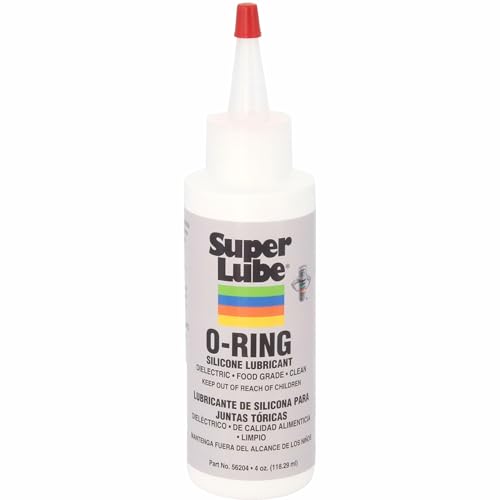
What it is: A clear, heat-stable silicone lubricant designed for o-rings, gaskets, vacuum and automotive equipment. It provides moisture resistance and oxidation protection, making it suitable for long-lasting seals in demanding environments.
Why it’s selected: Best for industrial, automotive, and scientific applications where high-temperature stability and reliable oxidation protection are needed. It’s a straightforward choice for users seeking a robust silicone lubricant for rubber O-rings.
Best for: Professionals working with seals that encounter heat or harsh conditions (e.g., automotive, industrial machinery). It’s a solid choice when longevity and protection matter most.
Limitation: May be over-specified for light household leak fixes; consider lighter, consumer-focused products for small-scale repairs.
AR-PRO 5oz General-Purpose Pool O-Ring Lubricant

What it is: A Teflon-based ( PTFE ) lubricant designed for pool o-rings, gaskets, and filters. The product emphasizes a non-melting film that resists wear and tear, forming an airtight, watertight seal on rubber, metal, and plastic components.
Why it’s selected: Best for homeowners and professionals needing a pack-friendly option that covers multiple o-ring joints in pool systems. The 5-ounce size is convenient for pocket kits and toolboxes, and its PTFE base offers durable performance in wet conditions.
Best for: Pool maintenance routines and repairs where a reliable, non-drying lubricant is desirable. It’s particularly suitable for regular o-ring upkeep in filters and valves.
Limitation: The two-pack option may be more than a casual user needs; smaller bottles or single-use tubes may suffice for occasional fixes.
Buying Guide: Key Considerations For Rubber O-Ring Lubricants
What is your primary environment?
Pool and spa settings demand water-resistant, non-melting formulations that withstand chlorinated or saline water. For kitchens and bathrooms, food-grade and NSF-certified products help ensure safety around drinking water and food contact areas.
What materials are involved?
Rubber o-rings come in various elastomers. Some lubricants are designed for silicone, fluorocarbon, or neoprene seals. Choose a product compatible with your specific o-ring material and the operating temperature range.
What is the required temperature range?
High-temperature applications (automotive or industrial equipment) require heat-stable lubricants. For everyday home use, a standard-temperature option is usually sufficient.
Do you need food-grade safety?
If the lubricant contacts drinking water or food surfaces, select NSF H-1 or equivalent certifications. This is common in faucet assemblies, water valves, and kitchen appliances.
What size is most convenient?
Small tubes (1 oz) are ideal for quick repairs and toolkits. Larger tubes (4 oz, 5 oz) are better for routine maintenance or professional use. Consider how often you perform o-ring servicing to determine the best size.
What is your risk tolerance for residue?
Some formulations leave a visible film or require cleaning before reassembly. If you prefer a clean interface, look for non-sticky, easy-wipe options designed for dry-to-wet transitions.
Compatibility and long-term performance
Evaluate whether the product prevents drying, cracking, and binding. A lubricant that stays adherent to o-rings without breaking down improves seal life, especially around pumps and filters that experience compression cycles.
FAQ
- Is o-ring lubricant necessary for all seals? It helps prevent friction and wear, reduces leaks, and supports long-term seal integrity in many applications.
- Can I use automotive silicone grease for pool o-rings? Only if the product is compatible with pool chemistry and specifically designed for wet environments; otherwise, use a pool- or food-grade option.
- What does PFAS-free mean in these products? The product does not contain PFAS substances, which are chemical compounds with environmental concerns; PFAS-free formulations are preferred for safety and compliance.
- Are these lubricants safe for drinking water systems? For water systems and fixtures, choose products with NSF H-1 or equivalent certification and follow manufacturer guidance.
- How do I apply o-ring lubricant correctly? Clean the o-ring and groove, apply a thin, even layer, and reassemble. Avoid over-lubricating, which can attract debris or affect seals.
- Should I use different lubricants for different materials? Yes. Silicone-based lubricants are common for O-rings and gaskets, while PTFE-based lubricants offer dry-film protection for certain plastics and metals. Always verify compatibility.