Rust and corrosion threaten tools, car parts, grills, and outdoor gear. The right rust removal products not only dissolve corrosion but also prep surfaces for painting or coating. This guide highlights five top options, spanning jelly and spray gels, water-based rust removers, anti-corrosion sprays, and preventative protectants. Each choice offers a distinct approach—from fast-acting dissolution to long-lasting protection—so you can select the best fit for your project. Below is a quick summary of the featured products to help you compare at a glance.
| Product | Brand | Format | Key Benefit |
|---|---|---|---|
| Rust-Oleum Rust Dissolver Jelly | Rust-Oleum | 8 oz jelly | Clings to metal and dissolves rust in minutes |
| Evapo-Rust Heavy-Duty Rust Remover | Evapo-Rust | 32 oz liquid | Water-based, non-acid, reusable |
| Rust-Oleum Rust Dissolver Trigger Spray Gel | Rust-Oleum | 32 oz spray | Foam/gel cling formula for vertical surfaces |
| WD-40 Specialist Corrosion Inhibitor | WD-40 Specialist | 6.5 oz spray | Long-lasting anti-rust protection, moisture barrier |
| STA-BIL Rust Stopper | STA-BIL | 13 oz spray | Anti-corrosion spray with battery terminal protection |
Rust-Oleum Rust Dissolver Jelly

Rust-Oleum’s Rust Dissolver Jelly offers a ready-to-use, thick gel that adheres to vertical and horizontal metal surfaces. The product targets iron, steel, and other metals with a formulation designed to cling and concentrate rust removal where it matters most. According to the product features, it dissolves medium to light rust within 10 to 30 minutes, and can yield fast results on heavily rusted areas with an additional application if needed. The gel format reduces run-off, making it practical for complex shapes like bolts, grills, and firearm components where brushing or scrubbing is less convenient. For prepared metal surfaces, the product typically requires a simple rinse and wipe to leave a suitable base for painting or coating.
Performance notes indicate that no heavy scrubbing is required—just rinse and wipe. This can shorten project timelines, especially on moderately corroded parts. As with most rust removers, surfaces should be thoroughly cleaned afterward to ensure proper adhesion for primers and paints. Safety considerations include using proper ventilation and protective gloves during application. Users report that the product handles light to moderate rust effectively, with the potential need for reapplication on stubborn patches. Overall, it’s a practical, user-friendly option for homeowners and hobbyists tackling metal corrosion in kitchens, workshops, or garages.
CRC Evapo-Rust Heavy-Duty Rust Remover

Evapo-Rust is a water-based, acid-free rust remover designed for a broad range of metals, including automotive parts, hardware, tools, cookware, and antiques. The product is described as non-corrosive and safe to use, with no harmful acids, solvents, odors, or fumes. One standout feature is its ease of use—no scrubbing or sanding is required; simply submerge parts or apply the solution to surfaces and allow it to work. The 32-ounce size is suitable for mid-size projects, and the solution is touted as reusable, which can help reduce waste and ongoing costs on larger jobs. It’s a versatile option for both home garages and professional workshops seeking a non-destructive rust removal method.
Limitations to consider include the need for sufficient immersion time to dissolve rust completely, particularly on heavily pitted surfaces. After treatment, parts must be rinsed and dried, with attention to any remaining corrosion or scale. While safe for many metals, always test on a small area first to confirm compatibility. The product’s environmental profile is appealing for budget-conscious users who want a reusable solution without aggressive acids. Evapo-Rust aims to deliver thorough rust removal while preserving underlying metal integrity across a broad spectrum of applications.
Rust-Oleum Rust Dissolver Trigger Spray Gel

This Rust-Oleum spray gel offers the same rust-dissolving power as the jelly, but in a convenient aerosol format designed for easier spray application and larger surfaces. The formulation clings to metal surfaces, enabling rust dissolution without heavy scrubbing. The product claims dissolution of medium to light rust within 10 to 30 minutes, with the possibility of requiring an additional application for heavier rust. The spray gel is particularly useful for parts with challenging contours, such as auto components or grill grates, where a gel can stay in place longer than a straight liquid.
Application and cleanup are straightforward: spray on, allow to work, rinse and wipe to prepare for painting or coating. As with other rust removers, wearing gloves and eye protection is advised, and surfaces should be thoroughly cleaned after treatment. The spray gel format supports efficient coverage of larger areas and vertical surfaces, reducing drips and waste. For users prioritizing ease of use and extended contact time, the trigger spray gel provides a practical alternative to jelly formats.
WD-40 Specialist Corrosion Inhibitor

WD-40 Specialist Corrosion Inhibitor is designed to coat metal parts with a protective barrier that blocks out air and moisture, reducing future rust formation. The product is described as providing long-lasting protection indoors for up to two years and up to one year outdoors in corrosive environments, making it a strong choice for preventative maintenance. The included spray straw aids precision application, allowing targeted coverage on hinges, fasteners, battery terminals, and other vulnerable connections. In addition to prevention, the coating can help extend the life of components exposed to humid or salty conditions, such as marine hardware and outdoor tools.
It’s important to note that this product focuses on protection rather than active rust removal. For surfaces that already have substantial rust, pairing WD-40 Specialist with an active rust remover can yield the best overall results—removing existing corrosion first, then applying a protective layer to prevent recurrence. The product’s dual-use capability—lubrication and corrosion prevention—adds value for ongoing maintenance programs in garages, workshops, and industrial settings.
STA-BIL Rust Stopper Anti-Corrosion Spray
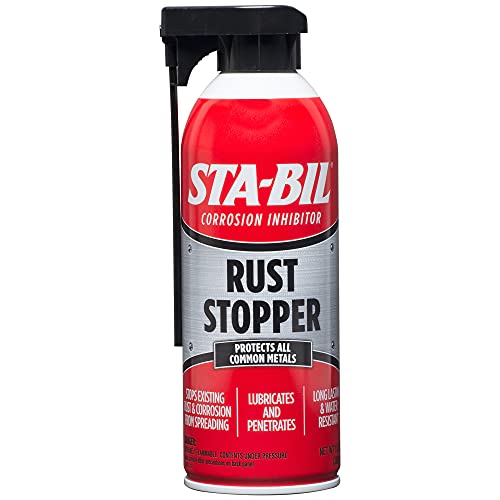
STA-BIL Rust Stopper is an anti-corrosion spray designed to curb rust formation while acting as a battery terminal protector. The product forms a protective layer over exposed metal surfaces, helping to prevent corrosion from moisture and oxygen exposure. It’s described as water-resistant, contributing to longer-lasting protection in environments prone to rain, humidity, or splashes. The inclusion of battery terminal protection makes it a practical option for automotive projects and electrical connections where corrosion can interrupt performance. The spray format facilitates even coverage on large or awkwardly shaped components.
As a preventative product, Rust Stopper complements rust-removal steps by extending the life of treated surfaces. For best results, apply to clean, dry metal and reapply as recommended by the manufacturer, especially after cleaning or finishing operations. While it isn’t a solvent-based rust remover, it excels as part of a comprehensive rust-prevention routine for equipment and vehicles exposed to challenging conditions.
Buying Guide: Key Purchase Considerations And Comparisons
- Active rust removal vs. prevention: If you need to dissolve existing rust, prioritize products labeled as rust removers (gel, spray gel, or liquid). For ongoing protection, consider corrosion inhibitors or rust stoppers that form protective barriers.
- Surface compatibility: Test products on a small area first to ensure compatibility with metal type (steel, cast iron, aluminum) and coating (paint, plating).
- Application method: Gel and spray formats offer different convenience. Gels cling to vertical surfaces, while sprays can cover larger areas quickly but may require masking to avoid overspray.
- Time to dwell: Most removers claim rust can dissolve in 10–30 minutes; heavily rusted areas may require multiple applications. Plan for reapplication if needed.
- Post-treatment preparation: After rust removal, surfaces often require rinsing, drying, and a primer or protective coating to prevent re-rust.
- Environmental and safety considerations: Choose acid-free, non-toxic formulas when possible, and ensure proper ventilation and PPE during use.
- Long-term protection: For equipment stored outdoors or in humid climates, pairing a rust remover with a corrosion inhibitor can extend the life of metal parts.
In selecting the right product, consider the project scope—whether it’s restoring a single tool, maintaining workshop hardware, or protecting automotive components. The five featured options cover a spectrum from aggressive rust dissolution to durable protection, enabling a well-rounded approach to rust and corrosion management for American households and small businesses alike.