Answering the question “which rust inhibitor for steel should I choose?” this guide highlights five proven options that form a protective barrier against moisture, air, and corrosive elements. Each product is best for different buyers: DIY homeowners protecting tools, outdoor gear, or vehicles; boaters needing weatherproof coatings; or industrial sites seeking long-term corrosion prevention. Below is a quick summary table to help you compare core use cases and suitability.
| Product | Best For | Main Benefit |
|---|---|---|
| WD-40 Specialist Corrosion Inhibitor | Indoor and mild outdoor environments | Long-lasting protection, precision application |
| Rust-Oleum Stops Rust | Outdoor tools, equipment, and machinery | Clear, moisture-blocking coating |
| CorrosionX Heavy Duty Anti Rust Spray | Marine, agricultural, and industrial gear | Self-healing, long-lasting barrier |
| Corroseal Rust Converter & Primer | Heavy rusted parts ready for painting | Converts rust and primes in one step |
| MuzeFansi 2-in-1 Rust Converter & Primer | DIY projects and automotive parts | Rust converter + primer in one step |
WD-40 Specialist Corrosion Inhibitor

Best for preventive maintenance on metal parts in controlled indoor environments. The formula coats metal to lubricate and protect against rust and corrosion by blocking out air and moisture. It offers up to two years of indoor protection and up to one year outdoors when used as directed. It is suitable for tools, hardware, and equipment that sit idle or operate in slightly corrosive atmospheres. A precision straw and secure storage feature help apply the coating accurately and keep the can closed when not in use. Limitations include potential surface sensitivity in extreme conditions and the need for reapplication after cleaning or heavy abrasion.
Rust-Oleum Stops Rust Corrosion Inhibitor

Best for long-term outdoor protection of metal surfaces exposed to moisture, humidity, and salt air. The formula creates a durable anti-rust barrier and forms a water-resistant coating that seals out moisture, making it ideal for outdoor tools, equipment, and seasonal gear. The clear finish avoids changing the appearance of your metal items. Choose this if you want a discreet, long-lasting protective layer; avoid if you require a colored coating or very thin substrates that may need reconditioning over time.
CorrosionX Heavy Duty Anti Rust Spray

Best for high-demand environments where weather, saltwater exposure, and physical wear are factors. Its self-healing, non-drip barrier clings to metal and resists rain, seawater, and pressure washing. The formula is designed for long-term performance, lasting up to five years indoors and two outdoors, making it suitable for boat trailers, farm equipment, and heavily used electrical connections. A potential limitation is its thicker consistency, which may require careful application on tight spaces or small components.
Corroseal Rust Converter & Metal Primer
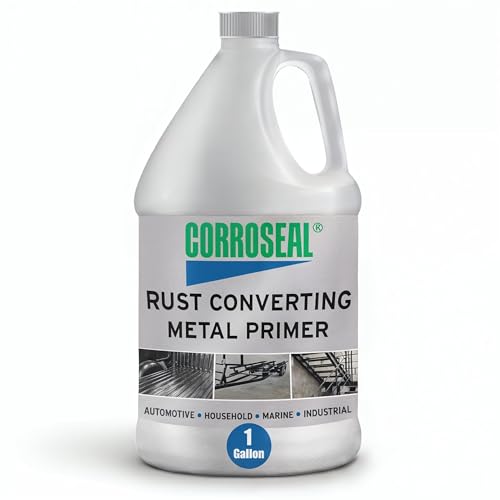
Best for heavy rusted surfaces that need conversion and priming in one step. This water-based rust converter and latex primer neutralizes iron oxide and provides a clean surface suitable for repainting. It is non-flammable and easy to clean with soap and water. Ideal for restoration projects on cars, trailers, marine gear, and industrial equipment. Limitations include the need to recoat after curing and ensuring proper ventilation during application.
MuzeFansi 2-in-1 Rust Converter & Primer

Best for DIY projects and automotive parts where both rust conversion and priming are needed in a single step. This product converts rust into a paintable surface while acting as a primer, sealing out moisture and air. It supports steel, iron, aluminum, and more, and withstands heat up to 350°F with UV and chemical resistance. Choose this if you want a streamlined, one-step solution for rusted metal; avoid if you require a dedicated topcoat with a wide color selection.
Buying Guide: Key Considerations
What level of protection do you need? For quick preventive protection on indoors items, consider WD-40 Specialist. For outdoor gear and tools exposed to moisture, a long-lasting barrier like Rust-Oleum Stops Rust is often best. Do you need rust conversion or primer as part of the process? Corroseal and MuzeFansi 2-in-1 offer direct rust-to-primer options. For marine or heavy-duty industrial use, CorrosionX provides a robust, self-healing shield. Consider coating thickness, reapplication frequency, and whether a clear finish is preferred for aesthetics or camouflage.
How will you apply it? Some products include precision spray options or dripless formulas, which matter for intricate parts. Surface prep remains critical: remove loose rust, clean oil and grease, and ensure dry, stable surfaces before applying any rust inhibitor.
What environmental conditions matter? Indoor environments allow longer intervals between applications; outdoor or coastal environments require coatings with moisture barriers and UV resistance. Temperature and humidity can influence cure times and adhesion, so follow manufacturer directions for best results.
What is your long-term plan for the metal? If you intend to repaint after treatment, rust converters and primers are convenient. If you only need friction reduction and lubrication plus corrosion resistance, a spray like WD-40 Specialist might be sufficient for light protection.
Product Comparison Snapshot
- Best for indoor prevention: WD-40 Specialist Corrosion Inhibitor
- Best for outdoor tools and equipment: Rust-Oleum Stops Rust
- Best for harsh environments: CorrosionX Heavy Duty Anti Rust Spray
- Best rust converter & primer: Corroseal Rust Converter & Primer
- Best 2-in-1 rust converter & primer: MuzeFansi 2-in-1 Rust Converter & Primer
FAQ
- What is rust inhibitor and how does it work on steel?
Rust inhibitors form a barrier on metal surfaces to block moisture, air, and corrosive elements, slowing or preventing oxidation on steel.
- Do rust converters prevent rust from returning?
Rust converters convert existing rust to a more stable compound and can provide a primer surface for painting, reducing future oxidation when paired with topcoats.
- Is clear coating better than colored coatings for rust prevention?
Clear coatings protect without altering appearance, while colored coatings add visibility and route for inspection. The best choice depends on visibility needs and aesthetics.
- Can I use rust inhibitors on all metals?
Most products target steel and iron; some are suitable for aluminum and other metals, but always check product specifications and compatibility.
- How often should I reapply rust inhibitors?
Reapplication intervals depend on exposure, surface prep, and wear. Outdoor or heavily used items typically require more frequent restoration than indoor storage items.
- Are rust inhibitors safe on painted surfaces?
Many products are designed for bare or lightly prepared surfaces; test on a small area if applying to painted metal and avoid damage to finish.