Rust and mineral buildup can stain bathrooms and require targeted products. This guide highlights five top rust remover options that are well-suited for bathrooms, kitchens, and related surfaces. Best for high-iron or hard water stains, best for easy spray application, and best for vertical surfaces are covered. The selection aims to help buyers compare clog-free spray gels, toilet-safe formulas, and lime-dissolving cleaners that work with minimal scrubbing.
| Product | Best For | Why It Stands Out |
|---|---|---|
| CLR Lime & Rust Remover (22 oz) | Stubborn rust and lime on multiple surfaces | Multi-surface, fast-acting, versatile |
| Iron OUT Rust Stain Remover Gel (24 oz) | Hard-to-reach rust stains | Gel formula clings and dissolves on contact |
| Rust-Oleum Whink Rust Stain Remover (16 oz) | Sinks, toilets, fabrics | No scrubbing required, low odor |
| Rust-Aid Rust Remover Spray Gel (22 oz, 2 Pack) | Vertical/bathroom surfaces | Spray format for easy application |
| Lysol Power Limescale Remover Bathroom Cleaner (32 oz) | Limescale and mineral buildup | Kills germs, breaks down mineral deposits |
Note: Each product targets mineral deposits, rust, or lime scale commonly found in bathrooms. When choosing, consider surface type, contact time, and whether you prefer spray gels, liquids, or tablet formats for ongoing prevention. The selections below provide varied formulations to fit different cleaning routines and surfaces.
CLR Lime & Rust Remover: Fast-Acting, Multi-Surface Cleaner

CLR Lime & Rust Remover blasts calcium, lime, and rust deposits and is designed for a range of surfaces including stainless steel, glass, ceramic tile, and vinyl siding. It is fast-acting and suitable for shower heads, countertops, bathtubs, fixtures, and sinks. Best for buyers seeking an all-in-one cleaner with broad surface compatibility and quick results. A potential limitation is performance on highly encrusted stains that may require repeated applications.
Iron OUT Rust Stain Remover Gel

Iron OUT offers a heavy-duty gel that clings to vertical or hard-to-reach surfaces to dissolve rust on contact. This makes it ideal for showers, tubs, sinks, tile, and even colorfast carpets. Best for users who prefer a strong, contact-dissolving formula with minimal scrubbing. A caution: gel products can leave residue if not rinsed thoroughly after dwell time.
Rust-Oleum Whink Rust Stain Remover
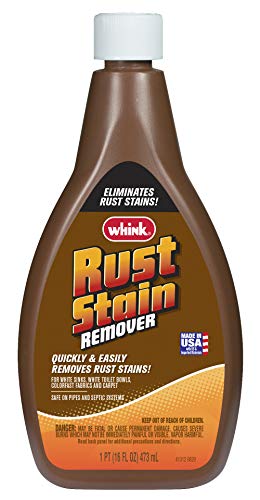
Whink Rust Stain Remover specializes in removing iron and rust stains from white sinks and toilets and is formulated to work on colorfast fabrics and carpets with minimal scrubbing. Best for quick spot treatment on bathroom fixtures where rust streaks occur. A limitation is that it may require multiple applications for stubborn stains.
Rust-Aid Rust Remover Spray Gel
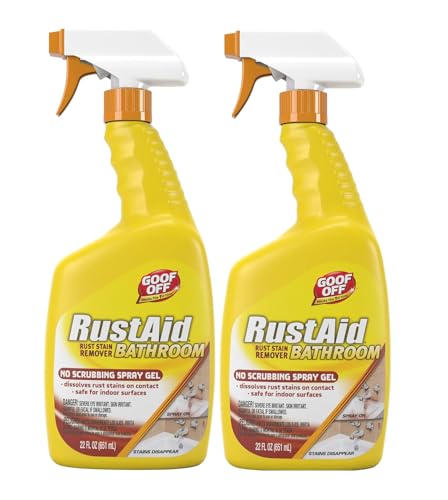
This spray gel targets rust on contact and works well on tubs, showers, sinks, tile, and other bathroom surfaces. Best for those needing a convenient spray format that reaches vertical surfaces and hard-to-reach spots. A potential limitation is the spray applicator’s clogging if not cleaned after use.
CLR Brands Calcium, Lime & Rust Remover with Cling

CLR with cling technology adheres to vertical and hard-to-reach surfaces, maximizing contact time for deeper cleaning of calcium, lime, and rust buildup. Best for targeted treatments on shower walls and tiles where drips are minimized, and dwell time is needed. A caution: may require longer dwell times on very stubborn deposits.
Buying Guide: Rust Remover For Bathrooms
What should you consider before buying?
- Surface compatibility: Choose formulas labeled for bathrooms and the specific surfaces you plan to treat (ceramic, porcelain, stainless steel, tiles, fiberglass, etc.).
- Stain type and severity: For heavy rust or hard water deposits, gel or cling formulations can provide longer dwell times; sprays are great for spot cleaning.
- Application method: Sprays are convenient for vertical surfaces; gels help with gravity-prone surfaces and prevent runoff.
- Ventilation and odor: Some products have low-odor formulas, which is important for bathroom use.
- Safety and disposal: Check for septic-system compatibility if applicable and follow product directions to protect plumbing and surfaces.
- Prevention: Consider aftercare cleaners or tablets to reduce future staining and rust buildup.
Frequently Asked Questions
- What is the best rust remover for bathroom surfaces?
- Can rust removers damage porcelain or chrome finishes?
- How do I treat lime scale without scrubbing?
- Are rust removers safe for septic systems?
- How often should I use rust removers to prevent buildup?
FAQ Answers
- The best option depends on stain type and surface; gel-based products cling and work on vertical surfaces, while sprays are convenient for quick spot treatments.
- Most bathroom-focused rust removers are formulated to be safe on porcelain and chrome when used as directed; always test a small area first.
- Limescale removers break down mineral deposits with dwell time; rinse thoroughly after use and wipe surfaces dry to prevent new buildup.
- Septic-friendly formulations are available; check product labeling to confirm compatibility with your system.
- For ongoing prevention, use a rust or mineral buildup prevention routine, including periodic deep cleans and the use of treatment tablets where appropriate.