Answering your search for reliable rust removers for tiled surfaces, this guide compares five top products designed to tackle rust, calcium, and lime buildup on bathroom and kitchen tiles. Ideal buyers: homeowners tackling hard water stains, renters needing simple spray solutions, and DIYers seeking multipurpose cleaners for tile, porcelain, and fixtures. Below, you’ll find quick picks, clear pros/cons, and practical buying tips to help you choose. The table summarizes key details for fast comparison.
| Product | Best For | Where It Shines |
|---|---|---|
| CLR Brands Calcium Lime & Rust Remover (22 oz Spray) | General home rust and lime stains | Multi-surface, strong spray action |
| Iron OUT Rust Stain Remover Spray | Stubborn rust on tile and fixtures | No-scrub gel, cling effect |
| Rust-Oleum Whink Rust Stain Remover | White porcelain, sinks, and toilets | Liquid formula, low odor |
| Kruggo 2026 Upgraded Cleaner Spray | Porcelain, tiles, bathrooms | Concentrated, preserves glaze |
| CLR Brands Calcium, Lime and Rust Remover with Cling | Hard-to-reach surfaces | Cling technology, better contact time |

CLR Brands Calcium Lime & Rust Remover Spray — 22 oz
Best for: general rust, lime, and calcium deposits on multiple surfaces.
Key features: Tackles tough stains with a 22 oz trigger spray; targets calcium, lime, and rust; suitable for stainless steel, ceramic tile, chrome, glass, porcelain, fiberglass, and more. This makes it a versatile choice for kitchens, bathrooms, and other high-moisture areas. Use on showers, sinks, tubs, and kitchen appliances to dissolve hard water deposits and rust rings.
Who it’s best for and why: Homeowners seeking a single, multipurpose cleaner that handles rust and hard water stains across a variety of surfaces. Its spray format simplifies application on vertical surfaces like shower doors and tile grout. Caution: surfaces with sensitive finishes may require testing in an inconspicuous area first.
Iron OUT Rust Stain Remover Spray with Cling
Best for: rust stains in bathrooms, kitchens, tile, and laundry where clinging gel helps reach vertical surfaces.

Key features: No-scrub gel clings to vertical surfaces, dissolving rust stains on contact; heavy-duty formula designed for long-term stains around water sources. Suitable for bathrooms, kitchens, tile, and laundry areas. It’s septic-friendly when used as directed and requires minimal scrubbing in many cases.
Who it’s best for and why: Users dealing with hard-to-reach rust stains in showers, tubs, or tile edges who want a gel that clings and works with limited scrubbing. Limitation: may require multiple applications for very deep stains, and the gel can leave residue if not rinsed thoroughly.
Rust-Oleum Whink Rust Stain Remover
Best for: white sinks and toilets, and colorfast fabrics and carpets with rust stains.

Key features: Heavy-duty iron stain remover that works on stubborn rust stains without scrubbing; low-odor formula safe for septic systems; effective on white bathroom fixtures and certain fabrics. This makes it a good choice for quick fixes on porcelain and fixtures that show rust deposits.
Who it’s best for and why: Those targeting white porcelain fixtures or delicate fabrics where a low-odor liquid is preferred. Caution: test on colored fabrics first as colorfastness varies by material.
Kruggo 2026 Upgraded Cleaner Spray
Best for: bathroom tiles, porcelain, and general surface cleaning with rust-related staining.
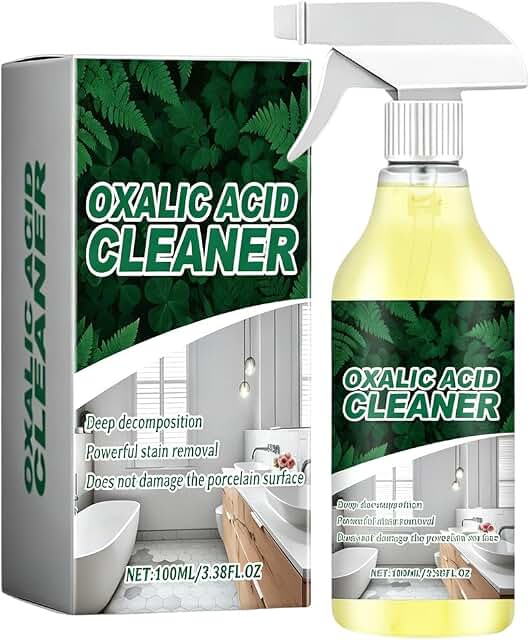
Key features: Concentrated cleaner that breaks down rust spots, hard water marks, and discoloration on tubs and tiles; versatile for porcelain, ceramic, concrete, brick, and sealed wood; preserves glazed finishes and leaves no visible residue after rinsing. This provides a balanced option for routine cleaning and stain removal on bathrooms.
Who it’s best for and why: Users seeking a concentrated spray for consistent maintenance on glazed surfaces. Better for routine cleaning to avoid etching or dulling finishes. Caution: avoid using on unsealed wood or unfinished stone that could be damaged by cleaner solvents.
CLR Brands Calcium, Lime and Rust Remover with Cling
Best for: hard-to-reach surfaces and vertical areas where cleaner contact time matters.

Key features: Enhanced cling technology helps the formula stay where sprayed for better cleaning power; superior dwell time on vertical surfaces; fast-acting breakdown of calcium, lime, and rust buildup; suitable for spot cleaning and treating larger areas.
Who it’s best for and why: Best for ceilings, shower walls, or tall tile surfaces where spray retention improves effectiveness. Limitation: like other heavy-duty removers, avoid prolonged contact with sensitive finishes without testing first.
Buying Guide: Key Purchase Considerations
What surfaces will you treat? Most rust removers work on tile, porcelain, glass, chrome, and ceramic surfaces. Some formulas are better for vertical areas due to cling or dwell-time features. If your tiles are colorfast or have decorative finishes, prioritize products that advertise glaze-friendly or low-abrasive action.
How strong should the cleaner be? For heavy mineral buildup from hard water, a stronger, fast-acting formula is beneficial. For routine maintenance, a milder or gel-based product that clings to vertical surfaces can reduce the need for scrubbing and repeat applications.
Do you need a no-scrub option? Gel cling formulas help reach crevices and corners. If you’re cleaning shower doors, grout lines, or tile edges, a cling or gel product can save time and effort.
Is odor a concern? Low-odor or unscented options are preferable for small bathrooms and shared spaces. Check product notes for odor levels and ventilation requirements.
What about safety and compatibility? Review labels for surface compatibility, contact time, and any warnings about finishes or colorfast fabrics. Always test a small, inconspicuous area before broad application.
How easy is cleanup after use? Some products rinse away quickly, while others may require thorough rinsing to avoid residue on tiles or fixtures. If you’re cleaning sensitive surfaces, choose a product designed for easy rinsing and residue-free results.
Frequently Asked Questions
- What is the best rust remover for tile and grout? Look for products labeled for tile, porcelain, and hard water stains with strong dwell-time or cling capabilities for vertical surfaces.
- Can I use rust removers on colored tiles? Test on an inconspicuous area first; some cleaners may affect colorfastness on certain finishes.
- Do rust removers require ventilation? Yes, use in a well-ventilated area and follow label instructions for safety and application time.
- Are these products safe for septic systems? Some formulas are septic-friendly when used as directed. Always check the product page or label for compatibility.
- How often should I treat rust stains on bathroom tiles? For persistent stains, apply as directed and re-treat after a short interval if needed. For maintenance, use a mild cleaner monthly.
- Is scrubbing needed after applying these removers? Gel-based or cling formulas minimize scrubbing, but light brushing may still be helpful for grout lines.