When choosing silica gel for drying flowers, select color‑indicating, reusable crystals that protect petals and maintain color. This guide highlights five reliable options and explains who each is best for, plus simple care tips. Ideal buyers include crafters, DIY wedding decorators, and hobbyists preserving pressed blooms.
| Product | Crystal Size | Best For | Reusability |
|---|---|---|---|
| Wisedry 5 LBS | <1 mm | DIY crafters, small batches | Yes |
| unuaST 10 LBS | Fine | Wedding bouquets, larger projects | Yes |
| Viktairy 5 LBS | <1 mm | Delicate petals, color‑preservation | |
| Wisesorb NET 2 LBS | Fine | Precision drying, display pieces | Yes |
| VOISEN 8 LBS | Medium to fine | Fast drying, bulk projects |
Wisedry Silica Gel Flower Drying Crystals — 5 LBS

Best for small‑batch DIY projects and hobbyists who want immediate, color‑coded feedback. Fine crystals under 1 mm reduce physical impact on petals and support healthier drying. The orange beads shift to dark green when saturated, signaling readiness for reactivation. Reuse is straightforward via microwave or oven recharging until beads turn orange again. Wear mask and gloves during handling if required. Suitable for those who value a visible saturation cue and reuse capability, with compact packaging for limited spaces.
unuaST Silica Gel Flower Drying — 10 LBS

Best for larger projects or wedding bouquet preservation with long‑term storage. This kit uses fine silica gel crystals designed to dry flowers in 2–5 days while minimizing damage and discoloration. Includes an airtight container and pour‑friendly handle for easy use. Easy to handle, COCl2‑free, and odorless, making it suitable for sensitive environments. Limitations include the need for an airtight container and careful handling during initial setup.
Viktairy Silica Gel Flower Drying — 5 LBS

Best for preserving vibrant color and shape with a compact kit. The all‑in‑one package contains a 5‑lb silica gel set plus an airtight container and brush for precise application. Fine crystals (<1 mm) reduce pressure on petals and support uniform drying over 3–6 days. Non‑toxic and dust‑treated for a cleaner drying process. Consider the extra container storage space required for the kit when planning workflows.
Wisesorb NET 2 LBS Silica Gel For Flower Drying

Best for precise, small batches and users who prioritize clear saturation indicators. The mix includes 5% orange indicating beads with 95% white crystals, enabling easy monitoring of moisture absorption. Small crystals reach between petals effectively for delicate flowers, preserving natural color and petal integrity. Reactivation is straightforward via oven recharging when beads turn green, but the reactivation time depends on quantity used. Ideal for hobbyists who want quick, visual feedback on saturation.
VOISEN Silica Gel Flower Drying — 8 LBS
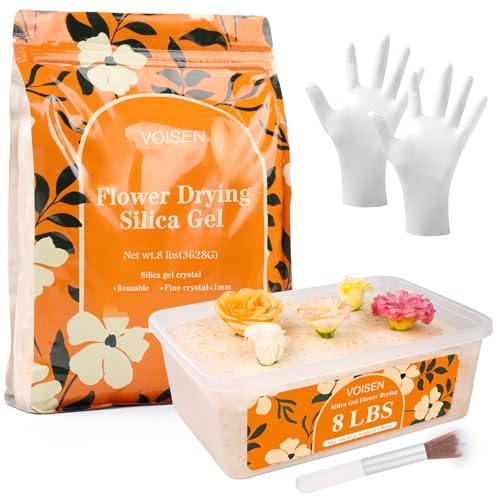
Best for fast, bulk drying projects and quick turnarounds. This kit emphasizes rapid moisture removal while maintaining original flower shapes and colors over 2–5 days. The silica beads are orange when fresh and turn dark green upon saturation, with reactivation possible in a microwave or oven. The product emphasizes non‑toxic composition and airtight storage for long‑term preservation. Suitable for users handling larger volumes or needing quicker processing times, with an emphasis on ease of reuse.
Buying Guide
What to consider when selecting silica gel for flower drying
- Crystal size: Fine crystals (<1 mm) spread evenly and minimize petal pressure; choose larger or mixed sizes for sturdier stems or thick blooms.
- Color indicator: Color changing beads provide a clear saturation signal; verify that the indicator shifts from orange to green for straightforward reactivation.
- Capacity: Match bag or container size to the bouquet or batch; larger batches require more silica gel for even drying.
- Reusability: Most options are reusable via microwave or oven; confirm reactivation instructions to avoid bead damage.
- Safety and odor: Look for COCl2-free products and odorless crystals to reduce residue on delicate blooms.
- Container design: Airtight containers help extend drying time and preserve shape; consider kits with lids for easier storage.
- Kit completeness: Some options include brushes, gloves, or storage boxes—evaluate what you need to minimize extra purchases.
How to Use Silica Gel For Flower Drying
Place a layer of silica gel at the bottom of a sealed container. Trim stems as needed and arrange flowers on the bed without crowding. Completely cover with additional crystals, ensuring petals are not pressed. Seal the container and wait 2–7 days depending on bloom thickness. Test petals gently for dryness; reheat crystals when beads turn green to orange again to reuse.
Common Tradeoffs
- Faster drying often requires more crystals or larger containers, increasing cost and space needs.
- Smaller crystals improve petal integrity but may be harder to remove from fine crevices; larger crystals are easier to work with but may leave slight texture differences.
- Color indicators add an extra feature but rely on correct reactivation timing to maintain accuracy.
Frequently Asked Questions
- Q: Do all silica gels work the same for all flower types? A: Generally yes, but delicate petals benefit from fine crystals and gentle handling to preserve color and shape.
- Q: How long do drying times take? A: Most flowers dry in 2–7 days, depending on bloom type, crystal size, and container seal.
- Q: Can I reuse silica gel after drying? A: Yes, reactivation via microwave or oven restores the orange color indicator, allowing continued use.
- Q: Are the crystals toxic? A: Reputable products are non‑toxic and dust‑treated; avoid ingestion and wear gloves when handling.
- Q: Is an airtight container necessary? A: Yes, it improves drying consistency and long‑term preservation.
- Q: Can I dry multiple blooms at once? A: Yes, but ensure adequate space and even layering to prevent crowding and uneven drying.