Answering the common buyer question: which spray water repellent is best for shoes? This guide highlights five top options and explains who each is best for. If you need quick protection for sneakers, leather, suede, or canvas, these picks cover a range of materials and uses. The goal is to help you choose a spray that forms a protective, breathable barrier without altering the look or feel of your footwear.
Summary table of top products
| Product | Best For | Key Benefit |
|---|---|---|
| Crep Protect Shoe Protector Spray | Sneakers, mixed materials | Hydrophobic coating with up to 4–5 weeks of protection |
| Scotchgard Fabric Water Shield | Household items, upholstery, shoes | Long-lasting fabric protection for various surfaces |
| BERIOVE Protect Shoe Protector Spray | Leather, suede, sneakers | Nano-technology barrier with low odor |
| Jason Markk Repel Spray | Leather, suede, canvas | Non-aerosol, PFAS/PFOA-free |
| COZGO Protect Shoe Protector Spray | All materials, outdoor gear | Lotus-effect nano protection and broad material compatibility |
Crep Protect Shoe Protector Spray
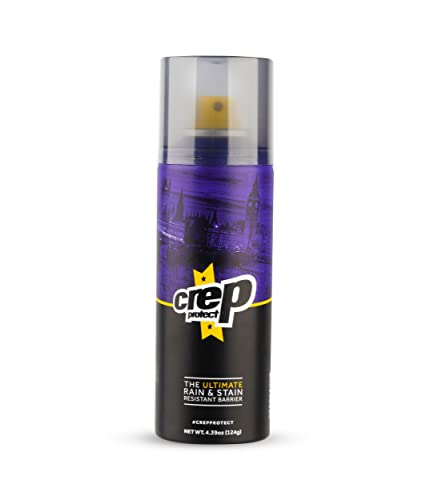
Best for: Mixed-material sneakers and casual footwear. This spray forms an invisible hydrophobic coating that repels water, oil, and stains. It’s designed to keep trainers looking fresh for several weeks and does well on Jordan shoes, leather, suede, nubuck, canvas, and more. Apply two coats for best results, and note that mesh remains permeable. Suitable for everyday wear where quick drying and ease of use matter most.
Caution: Mesh permeability means moisture can still pass through certain mesh surfaces; avoid relying on this for fully water-logged conditions. The product recommends two coats for durable protection, which may be a consideration for first-time users.
Scotchgard Fabric Water Shield

Best for: Household fabrics and shoes with fabric components. Scotchgard Fabric Water Shield provides strong water-repelling protection for upholstery, curtains, pillows, table linens, backpacks, luggage, and clothing. It offers long-lasting fabric protection and helps with easier cleanup after spills. It’s a versatile option when you want multi-surface protection beyond footwear.
Limitation: Not a footwear-specific spray; for sneakers or leather, consider compatibility with fabric zones or seek a product marketed for shoes to ensure optimal performance on all materials.
BERIOVE Protect Shoe Protector Spray

Best for: Leather and suede with a preference for low-odor, chemical-neutral formulas. BERIOVE uses nano-technology to create ultra-fine particles that penetrate surfaces, forming a durable barrier against water and stains. It is described as safe with minimal odor and suitable for a wide range of materials, including jackets and outdoor gear.
Limitation: The product data doesn’t specify duration on every material; performance may vary by material type and wear conditions. Users should test on a small area first.
Jason Markk Repel Spray

Best for: Multiple materials with emphasis on leather, suede, nubuck, and canvas, plus safe use on hats, bags, and jackets. Jason Markk Repel Spray is water-based, non-aerosol, and PFAS/PFOA-free, aligning with safer-at-home care. It’s easy to apply and quick-drying, making it suitable for frequent use in wardrobes that mix fabrics.
Limitation: Not recommended for unsealed or certain vegetable-tanned leathers; test first to avoid potential surface changes on sensitive materials.
COZGO Protect Shoe Protector Spray

Best for: Broad material compatibility with emphasis on sneakers, suede, leather, and canvas. COZGO touts nano-technology for a lotus-effect water barrier that remains breathable. It also claims applicability to tents and outdoor gear, suggesting versatility beyond footwear. Two coats at 6–8 inches distance with air-drying recommended for best results.
Limitation: The recommended two coats require drying time between layers, which may slow routine use for busy schedules.
WITOROR Shoe Protector Spray

Best for: Versatile use across sneakers, leather, suede, nubuck, and canvas. WITOROR relies on nano-technology to form a protective layer against stains and moisture while keeping odors minimal and surfaces looking clean. The formula targets a wide range of footwear and outdoor gear.
Limitation: Exact longevity can vary by material and use; reapplication may be needed after heavy exposure or extended wear in wet conditions.
Buying Guide
What should you consider when choosing a spray water repellent for shoes?
- Material compatibility: Ensure the product lists your shoe materials (leather, suede, nubuck, canvas, mesh, etc.) as suitable.
- Protection type and duration: Look for hydrophobic coatings with clear timeframes (weeks) and reapplication guidance.
- Aerosol vs. non-aerosol: Non-aerosol formulas can be safer and easier to control, especially for indoor use.
- Odor and chemicals: If you’re sensitive to smells or PFAS/PFOA concerns, prefer low-odor, chemical-free or PFAS-free options.
- Drying time and layers: Some products require multiple coats and drying intervals for optimal protection.
- Multi-surface use: If you want to protect gear beyond shoes, check whether the spray works on fabrics, tents, and outdoor equipment.
- Application ease: Fine mist and coverage uniformity reduce risk of staining or uneven protection.
Practical tips for applying shoe protectants
- Clean and fully dry shoes before application.
- Apply in a well-ventilated area or outdoors to avoid inhaling vapors.
- Hold the can or bottle 6–8 inches away and apply two light coats rather than one heavy coat.
- Allow sufficient drying time between coats and before wearing.
- Test on a small, inconspicuous area first to check for discoloration or texture changes.
FAQ
- Q: How long does protection typically last?
- A: Most sprays offer protection lasting from a few weeks to about a month, depending on wear and exposure. Reapply after heavy rain or cleaning.
- Q: Can these sprays be used on all materials?
- A: Check material-specific guidance on each product. Some formulations are versatile, while others are optimized for leather, suede, or canvas.
- Q: Are these sprays safe for white sneakers?
- A: Many options are designed to minimize discoloration, but always test on a small area first and follow directions carefully.
- Q: Do any options avoid PFAS or PFOA?
- A: Several products advertise PFAS/PFOA-free formulas or non-aerosol deployments; verify on the packaging or product page.
- Q: Can I use these sprays on outdoor gear?
- A: Some products are explicitly described as suitable for tents, backpacks, or other gear in addition to footwear.