Best Stainless Steel Hard Water Stain Removers for Clear Surfaces
If you’re dealing with mineral buildup on stainless steel surfaces, you want cleaners that remove hard water stains without dulling the finish. This guide highlights five reliable options, explaining who benefits most from each and why they were selected. It also offers practical buying tips and quick FAQs to help you choose the right product for homes, offices, or appliances.
Summary table of selected products:
Product
Brand
Best For
Key Benefit
Limitations
Bioclean Hard Water Stain Remover, 20.3oz
Bio-Clean Products
Heavy mineral buildup on glass, tile, and windows
Industrial-strength stain removal
Aerosol format may require ventilation
CLR Brands Lime & Rust Remover, 22 oz
CLR
Multi-surface use including stainless steel
Fast-acting, removes calcium, lime, and rust
Contains strong chelating agents; may require wiping residue
Brite & Clean Ultimate Hard Water Stain Remover
Brite & Clean
Glass, showers, stainless steel, granite
Biodegradable with surface compatibility
Instructions required for stubborn etching
Weiman Stainless Steel Cleaner & Polish, 2 Pack
Weiman
Appliances and metal finishes
Streak-free polish and protective shine
Long-term use may require reapplication for heavy buildup
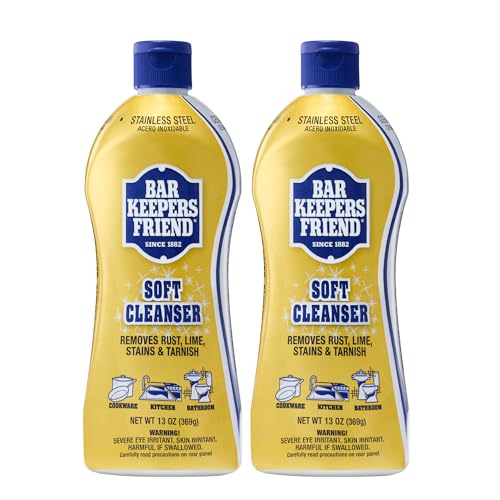
Bar Keepers Friend Soft Cleanser Liquid, 13 oz x 2
Best for heavy mineral buildup on glass, tile, and windows. This professional-grade aerosol targets years of hard water deposits and rust. Suitable for environments needing industrial-strength cleansing. Use caution in enclosed spaces due to aerosol delivery. Best for professionals or DIYers with robust cleaning needs.
Best for multi-surface use, including stainless steel, glass, and ceramic tiles. CLR quickly dissolves calcium, lime, and rust deposits, making it a versatile option for bathrooms, kitchens, and exterior surfaces. Best for households needing a single cleaner that handles several problem areas. Use as directed to avoid surface irritation or dulling on delicate finishes.
Best for glass, shower doors, and stainless steel surfaces including granite and porcelain. This formula emphasizes biodegradability and odor safety while maintaining effective mineral removal. Choose this if you prefer a cleaner with a gentler environmental profile, but follow instructions on persistent stains that may require repeated applications.
Best for appliances and metal finishes seeking a polished, streak-free look. Weiman cleans, polishes, and protects stainless steel, helping to resist fingerprints and water spots. Not ideal as a heavy-duty rust remover, but excellent for routine maintenance and restoring shine after mineral buildup. Follow directions for best results.
Best for multipurpose stainless steel cleaning and restoration. This liquid cleanser uses a micro-abrasive formula to remove rust, hard water deposits, and grime from a wide range of surfaces, including stainless steel. Use with a non-abrasive cloth to avoid scratching delicate finishes. Ideal for kitchens and bathrooms with frequent mineral buildup.
Buying Guide: How to Choose The Right Stainless Steel Hard Water Stain Remover
Surface type: For delicate finishes, start with a gentle formula like Bar Keepers Friend or Weiman, and reserve stronger cleaners for non-finished metal or tough stains.
Stain severity: Light rings and fingerprints respond well to polishing formulations, while deep mineral deposits may require rust- or lime-specific products like CLR or Bio-Clean.
Application method: Aerosol sprays offer broad coverage but require ventilation; liquids and pastes provide targeted application with less overspray.
Environmental impact: If indoor air quality is a concern, prefer biodegradable or low-odor formulas and follow all safety instructions.
Surface compatibility: Always test a small inconspicuous area first, especially on granite, brushed finishes, or multi-layer coatings.
Frequently Asked Questions
What cleaner is best for hard water stains on stainless steel appliances?
– A versatile cleaner like Weiman or Bar Keepers Friend is generally effective for routine stain removal and maintenance, followed by a polish for a streak-free finish.
Can CLR damage stainless steel?
– CLR is strong; use as directed and test on a small area. Avoid prolonged contact on sensitive finishes to prevent dulling.
Are aerosol hard water removers safer than liquids?
– Aerosols offer easy coverage but require ventilation. Liquids provide controlled application and less drift, which can be better for small areas.
Is there a safe option for granite or polished surfaces?
– Yes, products labeled as safe for granite or quartz surfaces, such as Brite & Clean, are designed for harder surfaces while reducing risk to stone finishes when used properly.
Should I rinse after using these products?
– Rinse or wipe as directed by the product label. Many stainless steel cleaners are designed to leave a protective film without rinsing, but always follow instructions.