If you want showroom-grade reflections without swirls, an ultra-fine polishing compound is the right choice. This article highlights top options for a range of buyers—from DIY enthusiasts to detail pros—who want a smooth, glassy finish on modern clear coats. The table below summarizes the five most relevant products and who they’re best for.
| Product | Best For | Notes |
|---|---|---|
| Meguiar’s M20508 Mirror Glaze Ultra Finishing Polish | Everyday detailers seeking flawless, swirl-free finish | High gloss, minimal defects |
| Meguiar’s Ultimate Compound | Scratch removal with added gloss | Heavy defect correction with deep shine |
| 3M Perfect-It Ultrafine Machine Polish | Professional finishing on dark colors | Professional-grade, ultrafine finish |
| Meguiar’s Ultimate Polish | Pre-wax finishing glaze for depth and gloss | Prep for waxing with rich reflections |
| Menzerna Super Finish Plus 3800 | Show-car level mirror finish | Silicone-free, bright depth |
Meguiar’s M20508 Mirror Glaze Ultra Finishing Polish
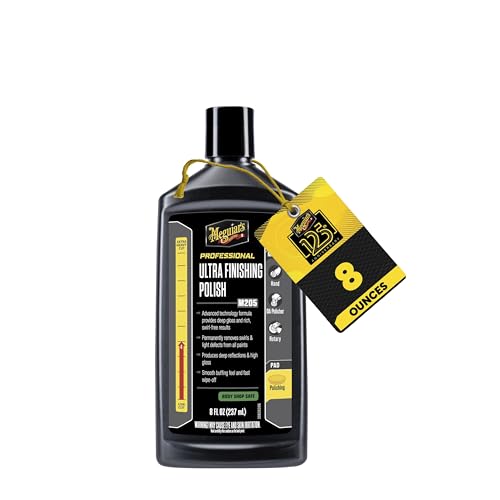
Best for: DIY detailers and professionals seeking a high-gloss, swirl-free finish on a variety of paint finishes. This formula targets light defects while delivering a deep, showroom-worthy gloss. Use after defect removal to maximize reflection and clarity.
Why selected: It combines advanced technology with a user-friendly polish that minimizes haze while maximizing depth. The result is a refined, smooth surface that’s ready for waxing or sealing.
Limitation: Works best after defect correction; applying on heavily damaged paint may require deeper compounding first.
Meguiar’s Ultimate Compound

Best for: Car owners dealing with scratches, swirls, and oxidation who still want a bright, polished finish. Suitable for hand or machine use on all gloss paints and clear coats.
Why selected: This compound focuses on defect removal while restoring color and clarity for a showroom shine in minutes. It’s effective for both spot repairs and broader correction projects.
Limitation: May require follow-up polishing to finish to a mirror-like depth on some darker colors.
3M Perfect-It Ultrafine Machine Polish

Best for: Professionals and advanced hobbyists finishing dark or hard-to-polish vehicles. This is designed to be used with a machine for a flawless final polish.
Why selected: It targets the final swirl marks with ultrafine abrasives to achieve the ultimate polish and a smooth, low-sling finish when used correctly.
Limitation: Requires a polisher and technique to maximize results; not ideal for complete beginners without guidance.
Meguiar’s Ultimate Polish

Best for: Preparing the surface before waxing to add depth and a high gloss, especially on dark-colored cars. It preps the paint for wax with a show-car look.
Why selected: It adds depth of color and maximum gloss, while gently removing fine swirls and towel marks for a mirror-like result.
Limitation: Primarily a pre-wax glaze; needs waxing afterward for long-term protection.
Menzerna Super Finish Plus 3800

Best for: Enthusiasts seeking a show-car mirror finish with a silicone-free formula. Works well on darker paint for a deeper, reflective glow.
Why selected: This polish is designed for a high-shine, micro-scratch correction with minimal haze, suitable for final passes after defect removal.
Limitation: Requires careful use with a compatible pad to avoid micro-marring; not a heavy-cut product.
Buying Guide: Ultra Fine Polishing Compounds
What should you consider when choosing an ultra-fine polish? Start with your paint condition and your setup. If you have light swirls, a finishing polish like Meguiar’s M20508 or Meguiar’s Ultimate Polish can deliver depth and gloss with minimal risk. For deeper defects, a compound with stronger cut, such as Meguiar’s Ultimate Compound or 3M Perfect-It Ultrafine, can remove more clearly defined defects before a finishing step.
Pad compatibility matters. Ultra-fine polishes work best with soft foam pads that hold product without sling. Machine polishing can yield consistent results, but hand polishing can still achieve excellent depth on small areas. Silicone-free formulas (like Menzerna Super Finish Plus 3800) reduce the chance of introducing fillers that mask defects.
Finish goals drive choice. If your priority is a show-car shine with the deepest reflection, consider a two-step approach: defect removal with a cleaner-polish, then a finishing polish to maximize gloss. If you’re time-constrained, select a single-step product designed for both defect correction and gloss improvement.
Surface care sequence. Typical order: wash, decontaminate, stage with a heavy cut if needed, refine with a finishing/polish, then sealant or wax. Always test on a hidden area first to confirm the resulting finish.
Frequently Asked Questions
- What is ultra-fine polishing? A polishing step using very fine abrasives to remove micro-mine scratches and enhance gloss and clarity on clear coats.
- Do I need a machine polisher for these products? Not always. Finishing polishes can be used by hand, while ultrafine machine polishes often yield the most consistent finish on larger surfaces.
- Can I use finishing polish after defect removal? Yes. Finishing polish refines the surface after an initial defect removal step to maximize gloss.
- Are these products safe for all paint types? Most are designed for clear coats and glossy paints; follow the manufacturer’s instructions and test on a small area.
- How long does a mirror-like finish last? Longevity depends on protection after polishing. Sealants or waxes extend the look and protect against environmental factors.
- Should I use fillers or cleaners? Prefer silicone-free, real polishing compounds and avoid products that rely on fillers for a true, durable finish.