Answer: A dedicated UV light is a practical tool for finding invisible cat urine and other hidden stains. This guide highlights five reliable options, each best suited for households seeking fast, objective stain detection, odor control, and quick cleaning planning. The top picks range from compact pocket models to brighter, more durable flashlights for larger spaces or outdoor use.
| Product | Best For | Why Pick It |
|---|---|---|
| Vansky UV Flashlight 51 LED | Homes with pets, multiple rooms | Strong, wide coverage; versatile uses beyond urine detection |
| ESCO LITE UV Flashlight 395nm | Detailed inspection, larger area scans | Upgraded LED, broader beam |
| Vansky 12 LED 395nm | Budget-friendly, travel-ready | Compact yet effective for dry urine and scorpions |
| GLOSSDAY 100 LED UV Light | Thorough inspections, outdoor/scorpion finding | More LEDs, longer range and brighter output |
| Lighting EVER 395nm | Portable daily use | Pocket-sized, durable, AAA included |
Vansky UV Flashlight 51 LED Blacklight for Pet Urine Detection

Best for: households needing a versatile, general-use UV flashlight. This model helps reveal pet urine stains on rugs, carpets, and clothes that are invisible to the naked eye, and also supports resin curing and outdoor scorpion finding. The friendly design supports outside use with the right batteries. Caution: avoid prolonged direct exposure to eyes, as with any UV device.
ESCO LITE UV Flashlight 395nm Pet Urine Detector

Best for: deeper inspections where a larger scan area matters. The upgraded 395nm LED helps reveal dried urine and other stains more clearly across carpets and rugs. It doubles as a general purpose blacklight for currency, whitening agents, and fluorescent materials. Limitation: most effective on dry urine stains, not fresh wet traces.
Vansky 12 LED UV Light Mini Black Light
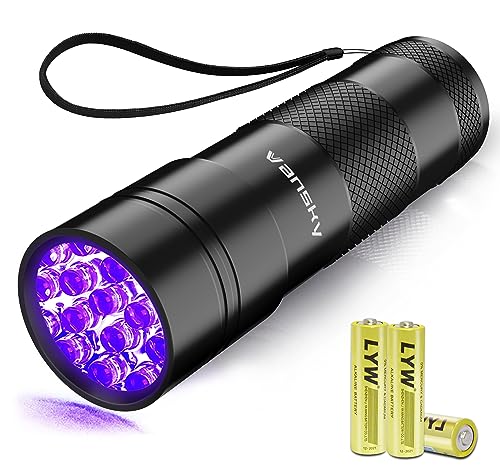
Best for: compact trips or quick checks in small spaces. This 12-LED model detects dried pet urine on carpets or sofas and also helps spot scorpions, fluorescing minerals, and currency verification. Caution: smaller beam means you may need to move around more to cover large areas.
GLOSSDAY UV Flashlight Black Light 100 LED

Best for: users who want a brighter, wider illumination range and stronger reliability for large rooms or outdoor areas. The 100 LEDs provide a broader scan with better coverage for pet urine detection, resin curing, and mineral identification. Limitation: higher power consumption compared to smaller models; ensure battery capacity supports longer sessions.
Lighting EVER Black Light Flashlight 395nm

Best for: daily carry and quick spot checks. This compact UV flashlight uses 395nm light to reveal animal urine, food stains, and fluorescent details. It includes AAA batteries for immediate use and is designed to be portable, waterproof, and impact-resistant for everyday tasks. Caution: ensure you replace batteries as needed to maintain peak brightness.
Buying Guide: Key Considerations For Choosing A UV Light For Cat Urine
- Wavelength: Most pet-urine detection uses around 395 nm. Some models offer 365 nm; 395 nm is common for visible fluorescence in urine and stains.
- LED count and brightness: More LEDs typically provide broader coverage and stronger glow. Balance with battery life.
- Portability: Pocket-sized models are convenient for travel or quick checks; larger flashlights are better for whole rooms or outdoor areas.
- Battery type and life: Check if batteries are included and expected runtime. USB-C rechargeable options reduce ongoing costs.
- Durability: Look for aluminum bodies, IP ratings for water/dust resistance, and grip design for easy handling.
- Versatility: If you want more than urine detection (currency verification, resin curing, minerals, scorpions), choose a brighter, multi-use model.
Frequently Asked Questions
- What wavelength is best for detecting cat urine?
395 nm is the most common and effective wavelength for visible fluorescence of dried urine stains on fabrics and floors. - Can UV flashlights detect fresh urine or only dried stains?
UV flashlights primarily reveal dried or set stains; fresh moisture may not fluoresce as clearly. - Are red or green LEDs better for stain detection?
UV (purple) light is standard for fluorescence. Visible LEDs help with general inspection, but fluorescing stains are best seen under 395 nm UV. - Is a brighter UV flashlight always better?
Brighter is helpful for larger areas, but battery life and beam width matter. Choose a model that fits your space and reuse needs. - Can these devices be used outdoors?
Yes, many models support outdoor use for scorpions or minerals, but verify IP rating and battery capacity for extended outdoor sessions. - Do these devices require special care?
Avoid shining directly into eyes, and store with batteries removed when not in use to prevent corrosion.