Answering the need for cleaner drywall sanding, these vacuum-assisted sanders connect to wet/dry vacuums to minimize dust at the source. They’re best for drywall finishers, painters, and DIYers who work in spaces where dust control matters—especially around furniture, floors, and electronics. The top picks below are chosen for compatibility with common vacuum systems, ease of use, and effective dust mitigation. Compare the five options to find the right balance of power, reach, and portability for your project.
| Product | Best For | Key Benefit |
|---|---|---|
| Hyde Tools 09165 Dust-Free Drywall Vacuum Hand Sander | Small to mid-size DIY projects | EasyClamp sand screen replacement; 6-foot hose |
| Goldblatt Dust Free Hand Sander | Dust-sensitive indoor work | Ergonomic grip; 6.5 ft hose; integrated vacuum adapter |
| IMQUALI Drywall Sander 2026 Upgraded | Ceilings and high walls | Telescopic extension; LED light; built-in vacuum system |
| Hyde 09170 Dust-Free Vacuum Sander | Pole-style sanding on larger areas | Compatible with vacuum, easy screen replacement |
| Protmex Drywall Sander 1000W | Versatile, lighter-duty to mid-range | Auto dust collection; 6 speeds; extension pole |
Hyde Tools 09165 Dust-Free Drywall Vacuum Hand Sander

The Hyde 09165 is a drywall hand sander designed to attach to a wet/dry vacuum for dust-free sanding. It protects furniture, floors, electronics, and lungs by drawing dust away at the source. An EasyClamp system allows quick sanding screen replacement. Best for smaller rooms or precise edge work where a compact tool is advantageous. Limitation: suited for handheld use; may require a compatible vacuum adapter for some setups.
Goldblatt Dust Free Hand Sander
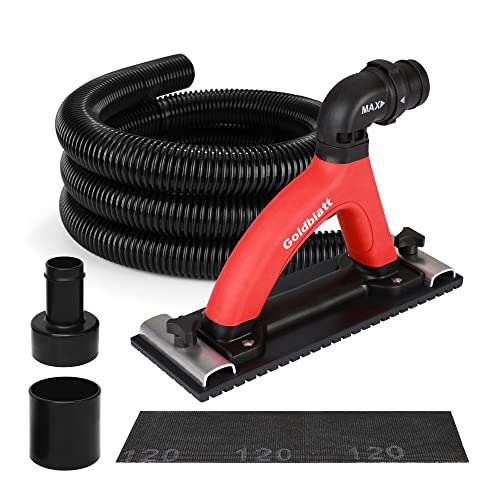
The Goldblatt sander is designed to reduce dust by up to 90% when paired with a vacuum. It features an ergonomic soft rubber grip to minimize hand fatigue, and it uses a vacuum connection through a dedicated hose, with Grit 120 sandpaper for even material removal. Best for extended sanding sessions where comfort matters. Caution: requires a compatible vacuum setup and correct sandpaper mesh to maximize dust capture.
IMQUALI Drywall Sander 2026 Upgraded

IMQUALI’s 2026 model emphasizes a telescopic, extendable handle, 7-speed control, and a built-in dust vacuum system. The design focuses on reaching ceilings and high walls without ladders, while keeping weight manageable. Best for professional-like projects where reach and dust control are critical. Limitation: some users may find assembly or balance different from fixed-length models.
Hyde 09170 Dust-Free Vacuum Sander

The Hyde 09170 is a handy drywall pole sander that connects to a vacuum to minimize dust across the worksite. It aims at protecting surrounding surfaces and lung health with an Easy Clamp system for quick sanding screen changes. Best for projects requiring reach along poles with minimal setup. Caution: compatibility and hose length should match your vacuum system for optimal dust capture.
Protmex Drywall Sander 1000W
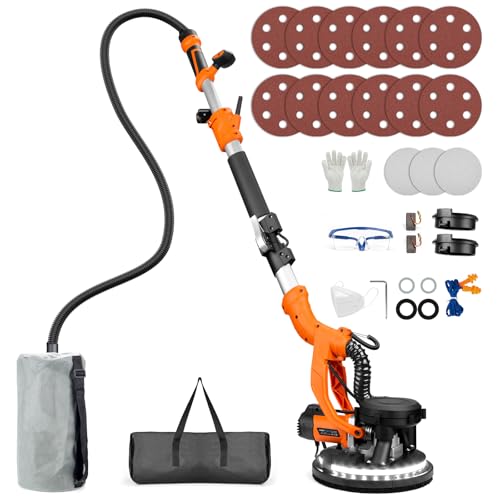
The Protmex 1000W sander offers auto dust collection with a 6-speed range and a retractable extension pole, designed for use on walls and ceilings. Best for general drywall work where a balance of power, mobility, and dust control is needed. Limitation: some models may be heavier than entry-level tools, impacting prolonged use.
Buying Guide: Key Purchase Considerations
- Dust control reliability: Look for built-in vacuum systems or effective sandpaper mesh to maximize dust capture and minimize cleanup.
- Reach and versatility: Telescopic or extension poles help access ceilings and high walls without ladders; consider weight and balance for extended use.
- Vacuum compatibility: Confirm the sander’s hose size and adapters fit your available wet/dry vacuums to ensure a proper seal and suction.
- Power and speed options: Higher RPMs improve material removal on tough surfaces; multiple speeds allow fine finishing on drywall vs. popcorn ceilings.
- Ergonomics and comfort: Ergonomic grips and comfortable weight distribution reduce fatigue during long sessions.
- Maintenance: Easy screen replacements and durable housings reduce downtime between tasks.
- Application fit: For ceilings, prioritize extendable handles and integrated lighting if needed for visibility.
Frequently Asked Questions
- What is the main benefit of using a vacuum-assisted drywall sander?
It reduces airborne drywall dust by pulling dust through the tool into a vacuum, keeping the work area cleaner and healthier.
- Do these sanders require specific sandpaper grits?
Many models come with standard grits (like 120) or compatible pads; check the product specs to match the intended finish.
- Can I use any wet/dry vacuum with these sanders?
Most are designed to work with common vacuum sizes, but always verify the hose diameter and adapter requirements before purchasing.
- Are telescoping extension poles essential?
They’re very helpful for ceilings or tall walls, reducing ladder use and improving reach, but not always required for small rooms.
- What should I consider when choosing the best sander for popcorn ceilings?
Look for a model with a strong dust collection system, stable RPMs around 800-1800, and a extendable handle for ceiling work.
- Is weight a concern for long sanding sessions?
Yes. Lighter tools reduce fatigue, but ensure the device still provides enough power and rigidity for the job.