Answering the demand for quieter lab and workshop equipment, these vacuum pump exhaust silencers are designed to reduce noise from scroll pumps, air compressors, and other industrial exhausts. The top picks below suit buyers who value noise reduction, compact design, and straightforward installation. Choose an Edwards option for compatible nXDS pumps, or a versatile model from HVMOSTE for a range of NPT sizes. The table summarizes each pick’s best use and key strengths.
| Product | Best For | Key Benefit |
|---|---|---|
| Edwards Vacuum Exhaust Silencer A50597000 | nXDS Dry Scroll Pumps | Effective noise dampening with KF-25 flange fit |
| AVCRAY Vacuum Exhaust Silencer A50597001 | XDS35i Series Pumps | Filtration + attenuation for cleaner exhaust |
| XY-12 Exhaust Silencer | Industrial air systems | 1-1/4″ NPT interface with solid noise reduction |
| XY-15 Exhaust Silencer | Higher-flow exhausts | 1-1/2″ NPT interface, strong attenuation |
| XY-10 Exhaust Silencer | Compact installations | 1″ NPT interface with compact form |
Edwards Vacuum Exhaust Silencer A50597000 for nXDS Pumps

Best for: nXDS6i, nXDS10i, and nXDS15i dry scroll pumps needing standard KF-25 connections. This silencer includes a KF-25 centering ring and clamp, aligning with Edwards part number A505-97-000. It dampens the roughing sound as the pump evacuates a chamber, acting as a muffler for the exhaust line.
Why chosen: The product is designed to fit Edwards nXDS pumps directly, reducing startup noise and ongoing operation noise. It is a straightforward choice for users with these specific pumps and KF-25 interfaces.
Caution: Only appropriate for listed Edwards nXDS models with KF-25 flange; verify pump compatibility before purchasing.
AVCRAY Edwards Vacuum Exhaust Silencer A50597001 for XDS35i
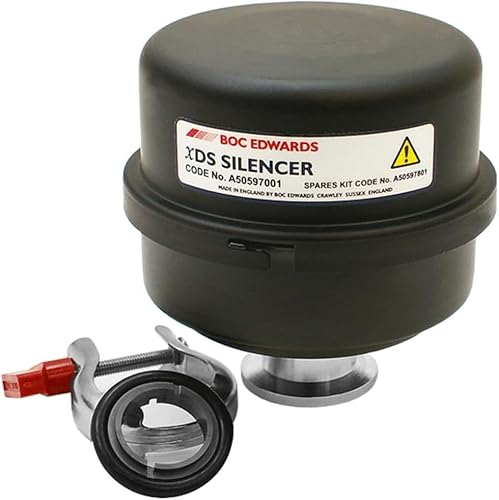
Best for: XDS35i series dry scroll pumps not connected to a house exhaust system. This silencer ships with filter media and offers exhaust filtration while attenuating noise. Its tubular design positions the tube to maximize attenuation without sacrificing air flow.
Why chosen: It adds filtration capability alongside noise reduction, making it suitable for cleaner exhaust in sensitive spaces. The design supports better attenuation at common operating ranges.
Caution: Ensure compatibility with XDS35i models; filter media is included, but replacement media may be needed over time.
XY-05 Exhaust Silencer for Industrial Equipment
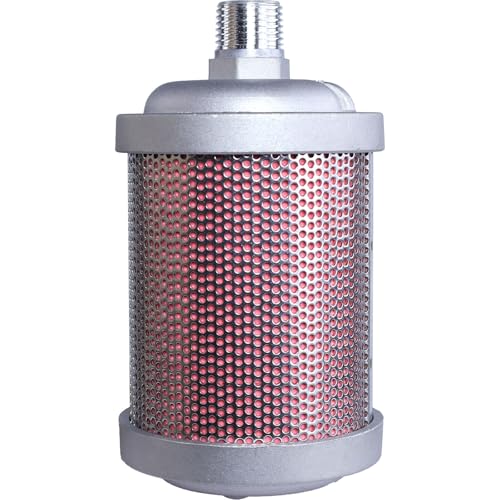
Best for: General-purpose exhaust noise reduction on dryers, air compressors, and vacuum pumps with a 1/2″ NPT male interface. It provides standard mounting and reliable reduction of exhaust sound while maintaining air flow.
Why chosen: The 1/2″ NPT size covers many common equipment connections, making it a versatile option for smaller or mid-size setups.
Limitation: May be less suitable for high-flow systems, where larger NPT sizes like 1-1/4″ or 1-1/2″ are preferred.
XY-12 Exhaust Silencer 1-1/4″ NPT

Best for: Air compressors, dryers, and vacuum pumps with a 1-1/4″ NPT interface. This model offers effective exhaust noise reduction while maintaining airflow efficiency in mid-range systems.
Why chosen: The 1-1/4″ size is a common standard in many facilities, providing a good balance between compatibility and performance.
Caution: Ensure your exhaust port matches 1-1/4″ NPT threads to avoid installation issues.
XY-15 Exhaust Silencer 1-1/2″ NPT

Best for: Higher-flow exhaust systems needing stronger noise reduction with a 1-1/2″ NPT interface. It provides robust attenuation without unduly restricting airflow.
Why chosen: For setups that require more substantial noise control, the 1-1/2″ size offers better attenuation performance while remaining compatible with many industrial exhausts.
Limitation: Larger diameter may require more space for installation and routing in confined areas.
Buying Guide
What should I consider before buying an exhaust silencer?
- Connection size: Match the silencer’s NPT/KF-25 flange to your pump or equipment port (common sizes include 1/2″, 3/4″, 1″, 1-1/4″, 1-1/2″).
- Flow and pressure drop: Heavier attenuation can slightly increase backpressure. Choose a model that balances noise reduction with acceptable airflow.
- Filtration needs: Some models include or support filter media to reduce contaminants in exhaust air. Consider whether filtration is necessary for your space.
- Compatibility: Confirm the exact pump or equipment model (e.g., Edwards nXDS series, XDS35i) to ensure a proper fit.
- Material and build: Durable metal housings are typical; check corrosion resistance if your exhaust carries chemicals.
Which features deliver the best value?
- Integrated filtration or media: Useful in labs or clean rooms where exhaust air should be filtered before release.
- Tubular silencing design: Maximizes attenuation while preserving flow, reducing backpressure.
- Compact footprint: Important for tight installations; consider dimensions and mounting options.
How do I install an exhaust silencer safely?
- Shut down and depressurize the system before installation.
- Follow manufacturer mounting guidelines to avoid leaks or vibration transfer.
- Inspect seals and clamps after initial run-in and again during regular maintenance.
Maintenance and longevity considerations
- Replace filter media when supplied or as recommended by the silencer designer.
- Inspect for corrosion, cracks, or loose fittings periodically.
- Keep the exhaust path clear of obstructions to maintain airflow and noise reduction performance.
Quick comparison at a glance
- Best for Edwards nXDS pumps: Edwards A50597000
- Best for XDS35i with filtration: AVCRAY A50597001
- Versatile 1-1/4″ option: XY-12
- Higher-flow needs: XY-15
- Compact, general use: XY-10
Frequently Asked Questions
- What is the main purpose of an exhaust silencer for vacuum pumps?
It reduces operational noise and can provide filtration in certain models. - Which size should I choose for my pump?
Pick the NPT size that matches your pump’s outlet; common sizes are 1/2″, 3/4″, 1″, 1-1/4″, and 1-1/2″. - Do silencers affect pump performance?
They may introduce a small pressure drop; select a model that balances noise reduction with acceptable flow. - Can I use these silencers with any vacuum pump?
Check compatibility with your pump model and connection type to ensure a proper fit. - Is filtration always required?
Filtration is beneficial in sensitive environments, but not always necessary for basic noise reduction. - How do I maintain an exhaust silencer?
Regularly inspect seals, replace media if included, and clean internal baffling as needed.