Yes, a waterproof spray can protect electrical connections by forming a protective, moisture-resistant barrier. This guide highlights top options for electronics, panels, wires, and connectors, explaining who each product is best for and why. Perfect for DIY enthusiasts, hobbyists, and professionals needing durable outdoor or moisture-prone protection.
The following table summarizes the five selected products and their ideal use cases to help you compare quickly:
| Product | Best For | Key Benefit |
|---|---|---|
| WEICON Isolation Spray | Circuit boards, motors, and general electronics | Clear insulating, UV-resistant film with broad temperature range |
| Electro-Seal by DUCKY PRODUCTS | Electrical panels, battery terminals, and exposed connectors | Flexible rubber-like coating that seals against moisture even under submersion |
| ElectroniCoat Conformal Coating | Marine, outdoor, and industrial electronics | High dielectric strength and a crystal-clear finish |
| 5.29 oz Liquid Electrical Tape | Wires, cables, outdoor and automotive work | Quick-drying, brush-on sealing with durable protection |
| Plasti Dip Liquid Electrical Tape Spray | General protective coating where a sprayable seal is needed | US-made option with spray-on versatility |
WEICON Isolation Spray – Clear Insulating & Protective Coating

WEICON Isolation Spray provides a clear insulating layer that repels moisture, dust, oil, and corrosion. It’s designed for circuit boards, wires, switches, and related components where a discreet but durable barrier is desirable. The formula dries quickly for fast repairs and routine maintenance, making it suitable for home electronics, workshop projects, and automotive wiring. The coating is built to last, withstanding UV exposure, acids, oils, and temperatures from -40 °F to +248 °F. A key advantage is that it won’t crack or peel under tough conditions, preserving functionality over time.
This product is best for buyers who want a transparent, protective film that does not interfere with visual inspection or future servicing. It’s particularly suited for users who handle electronics in environments with variable temperatures or exposure to sun and chemicals. Consider this option if you need a versatile, long-lasting insulating layer without adding color or texture to sensitive components.
Limitations: While robust, the fast-drying nature means you should apply in a well-ventilated area and avoid excessive buildup on tight tolerances. It may not replace a full conformal coating in extreme, immersion-prone scenarios if deep moisture ingress is a concern.
DUCKY PRODUCTS Electro-Seal: Electrical Waterproofing

Electro-Seal offers a flexible rubber coating that forms a durable moisture barrier for a range of electrical applications. The coating remains effective against rust and corrosion even under submerged conditions, making it a strong choice for exposed outdoor panels, battery terminals, and wiring. Its broad compatibility means it can be used on nuts and bolts prone to rust, as well as common electrical connectors. The spray-on application is straightforward and dries to a rubbery film that conforms to irregular shapes, helping seal hard-to-reach areas.
Best for buyers seeking a resilient, rubberized seal that can adapt to irregular surfaces and provide a strong moisture barrier. It’s an effective option for outdoor equipment, marine-related electronics, and areas where water exposure is anticipated. A caution: flexible rubber coatings can be thicker, which may affect close-fitting assemblies or connectors with tight tolerances if applied too heavily.
ElectroniCoat Conformal Coating for Electronics

ElectroniCoat is a conformal coating designed for high-voltage and harsh environments. It creates a transparent barrier that protects terminals, junction boxes, and circuit connections from moisture, salt spray, rust, and corrosion, even with submersion. The coating provides a high dielectric strength, which is beneficial for professional-grade electronics work. It dries to a crystal-clear finish, allowing ongoing inspection of wiring without removing the coating, a major convenience for maintenance and diagnostics.
Choose this product if you need a robust, professional-grade sealant capable of withstanding demanding environments such as marine or outdoor industrial settings. Ideal for applications where visibility of components is important. Limitation: The strong, clear barrier is not as flexible as rubber coatings, so delicate or highly flexible assemblies may require careful application and curing control.
5.29 oz Liquid Electrical Tape with Brush Cap
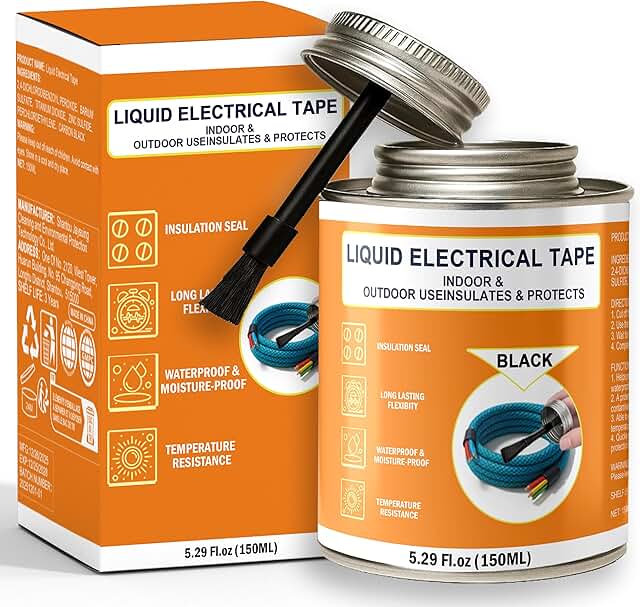
This quick-drying insulating tape comes in a brush-cap bottle for precise, controlled application. It forms a durable protective layer over electrical connections, shielding against moisture and environmental exposure. The film cures to a resilient, flexible coating that resists cracking and peeling over time, making it suitable for wiring, cables, connectors, outdoor, and automotive equipment. It’s especially useful when you need rapid, localized protection without disassembling components.
Best for buyers who want a fast, brush-on solution for small repair jobs or hard-to-reach connectors. It’s a good match for mobile or seasonal projects where quick remediation is essential. Limitation: The coating is typically black and can obscure color-coded wiring; ensure you select the right product for visibility needs in critical assemblies.
Plasti Dip Intl. 16003-6 Liquid Electrical Tape Spray

Plasti Dip’s sprayable liquid electrical tape offers a versatile, US-made coating solution. It sprays on to form a protective layer over wires, connectors, and other electrical components. The lacquer-like film dries to a flexible, rubberized finish that can resist moisture, oils, and other contaminants. This option is convenient for large or irregular shapes where brush-on products are impractical and provides a uniform layer over complex geometries.
Best for buyers who need a spray-applied seal for large areas or irregular shapes. It’s a convenient choice for quick protective coverage in workshops or outdoor projects. Limitation: Some users report longer cure times in high humidity environments, and removal can be more challenging if future servicing is required.
Buying Guide: What to Consider When Choosing a Waterproof Spray for Electrical Connections
What environment will the coating face? Consider UV exposure, temperature range, humidity, and potential immersion. For outdoor or marine use, choose formulations with high dielectric strength and flexible adhesion to prevent cracking.
What form do you prefer? Sprays, conformal coatings, and brush-on tapes each have different application profiles. Sprays are quick for large areas; conformal coatings offer thorough protection; brush-on tapes allow precise coverage on small components.
How important is visibility and inspection? Transparent or crystal-clear coatings enable ongoing monitoring of wires and connections without removal, which is valuable for maintenance.
Is electrical tolerance critical? High dielectric strength protects against shorts in higher-voltage applications. For sensitive electronics, avoid overly thick coatings that could affect tight tolerances or heat dissipation.
What is the required cure time and ease of removal? Some coatings cure rapidly, while others may require longer periods or specific solvents for removal, impacting serviceability during repairs.
Storage and handling: Ventilation and dryness are important during application. Follow product-specific safety data and ensure proper curing in a well-ventilated area.
FAQ
- Do I need a conformal coating for all electronics? Not always. Conformal coatings provide robust protection in harsh environments, but for simple, dry indoor use, a clear insulating spray or liquid tape might suffice.
- Can these sprays be used on battery terminals? Yes, several products are designed to seal battery terminals and metal connections, reducing corrosion and moisture ingress.
- Will coatings affect electrical performance? High-dielectric or clear, thin coatings typically do not affect performance; applying too thick a layer can impact fitment or heat dissipation.
- Are these products safe for all plastics and rubbers? Most are formulated for common electrical substrates, but always test on a small area if your parts have sensitive finishes or coatings.
- How should I remove a coating later? Some products require solvent-based removal or mechanical scraping; check the manufacturer’s guidance for removal options and compatibility.
- Are color-coded coatings better? Color can help identify coverage, but clear coatings are preferred when visual inspection is essential.