If you need a white epoxy solution for plastic repairs, this guide highlights five reliable options and why each is best for specific scenarios. These products are suited for DIY enthusiasts, homeowners, and professionals tackling plastic repairs, bonding, or water-resistant fixes. The selections emphasize white or off-white epoxies and putties that cure well on plastic surfaces, resist solvents, and offer practical cure times. Whether you’re patching a PVC pipe, repairing ABS components, or sealing a cracked bumper, these picks help ensure a strong, lasting bond.
Chosen products at a glance
| Product | Best For | Key Strength |
|---|---|---|
| J-B Weld Plasticweld Epoxy Putty Stick | Plastic repairs on ABS, PVC, CPVC, pipes | Off-white color; 600 psi lap shear; 25 min set, 3 hr cure |
| J-B Weld WaterWeld Epoxy Putty | Underwater repairs and potable water applications | Off-white; NSF certified; 25 min set, 1 hr cure |
| PC-Products PC-11 Epoxy Paste | Underwater or dry repairs on varied materials | Off-white; versatile bond surface |
| Limino Epoxy Putty – White | General repairs, cracks, leaks, and modeling | White; easy mix; cures 24 hours |
| Loctite Marine Epoxy, White | Bonds underwater or wet surfaces | White; two-part syringe; 2-hour set, 24-hour cure |
J-B Weld Plasticweld Epoxy Putty Stick

Product overview: A hand mixable two-part epoxy putty stick designed to repair and rebuild various plastics, including ABS, PVC, CPVC, auto bumpers, and more. The off-white cured color blends with many surfaces. The cure schedule is 25 minutes to set and 3 hours to fully cure. The epoxy exhibits a lap shear strength around 600 psi and can withstand continuous temperatures up to 250°F (121°C) and intermittent temperatures up to 300°F (148°C). It does not shrink and can be molded, sanded, drilled, or cut after curing.
Best for: DIY plastic repairs on pipes, fittings, and automotive components where a moldable, set-on-contact putty is needed. The off-white tone helps blend with lighter plastics, reducing visible repair lines.
Limitation: Not ideal for metal-to-plastic bonding where high/rigid strength beyond 600 psi is required; performance data emphasizes plastic applications.
J-B Weld PlasticBonder in Tan (Syringe)
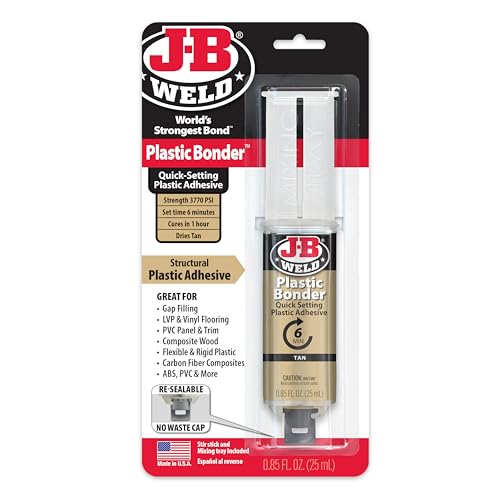
Product overview: A quick-setting two-part urethane adhesive designed for plastics, with a 1:1 mix ratio delivered via syringe. The tan color helps blend with many surfaces, offering a strong bond for DIY repairs, dent filling, and bumper repairs. The kit includes a mixing tray and stir stick; it sets in about 15 minutes and cures in 30 hours, with a tensile strength around 3,770 psi. The syringe design minimizes mess and allows multiple uses.
Best for: Projects needing a fast, durable bond on plastic parts with complex shapes, especially where precise application matters. Choose this if you want a surfaced-ready repair with a relatively high final strength.
Caution: The tan color may contrast with very light surfaces; plan for color matching if a near-invisible repair is required.
J-B Weld PlasticWeld Quick-Setting Epoxy Syringe
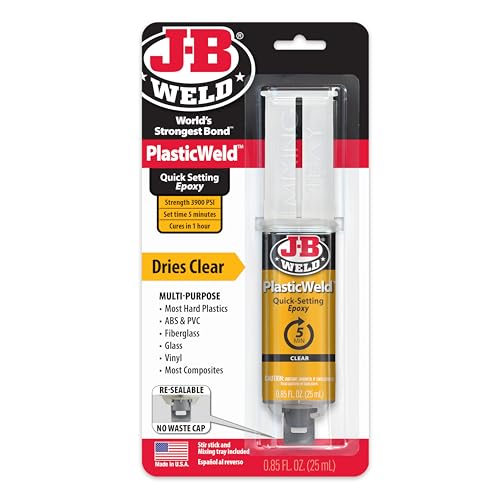
Product overview: A rapid-setting two-part epoxy for plastics including ABS, PVC, fiberglass, glass, vinyl, and more. The translucent yellow color cures to a visible color but provides a quick bond. It uses a 1:1 mix in a syringe with a resealable cap for repeated use. Sets in about 5 minutes and cures in 1 hour; tensile strength around 3,900 psi.
Best for: Fast repairs on plastic components where speed is a priority and a strong bond is required quickly. This is useful for small, time-sensitive fixes on light-duty plastics.
Limitation: The cure is quick, but for large repairs or critical structural loads, a longer cure option may be preferable to maximize adhesion.
Loctite Marine Epoxy, White
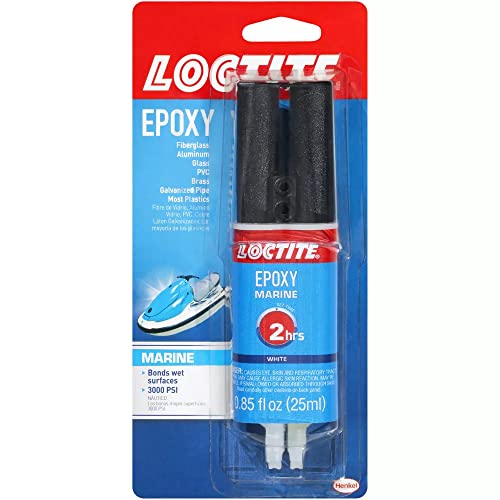
Product overview: A two-part marine epoxy designed to bond wet or underwater surfaces. The double syringe applicator dispenses resin and hardener in equal amounts, producing a rigid, high-strength bond. It sets in about 2 hours and fully cures in 24 hours, with a white cured color. It is suited for projects exposed to water and moisture, including plumbing or boat repairs.
Best for: Repairs on plastic components that will be exposed to water, humidity, or submersion, where underwater compatibility is essential.
Limitation: Underwater setting requires precise handling to avoid gaps; plan for surface preparation to maximize adhesion in wet conditions.
PC-Products PC-11 Epoxy Paste

Product overview: A two-part marine epoxy adhesive paste that bonds materials in dry, wet, and underwater environments. It adheres to fiberglass, concrete, metals, glass, ceramic, rubber, and more. Its versatility suits indoor and outdoor applications, with a service temperature range from -20 to +200 degrees Fahrenheit and 35 to 115 degrees Fahrenheit working range.
Best for: Multimaterial repairs where a consistent, white epoxy paste is desired and the environment may vary from dry to submerged conditions.
Limitation: The paste form may require more shaping and smoothing after cure for a neat finish on small plastic components.
Buying Guide: White Epoxy For Plastic Buyer Essentials
- What surface will you bond? For plastic-to-plastic joints, choose epoxies and putties designed for plastics and PVC. For underwater or wet environments, look for marine-grade or NSF-listed products.
- Do you need moldability or quick setting? Putty sticks are moldable and forgiving, while syringes provide precise, fast-setting bonds. Consider cure time and final strength for your application.
- Color considerations: White or off-white epoxies blend better with light-colored plastics. If color matching is critical, choose products with clear or tan options and plan finishing steps as needed.
- Temperature and chemical resistance: If the repaired area experiences heat, chemical exposure, or outdoor sun, verify the advertised continuous-use temperatures and chemical resistance to avoid failure.
- Underwater and potable water suitability: For plumbing or potable-water-related repairs, select NSF-certified or marine epoxy products that are approved for such use.
- Application tools and cleanliness: Syringe-based products reduce waste and mess; putty sticks require kneading. Clean surfaces thoroughly for best adhesion.
Frequently Asked Questions
- Q: Can I use white epoxy on all types of plastic? A: Most epoxies bond well to common plastics like ABS, PVC, and CPVC, but always check the product’s data sheet for compatibility.
- Q: How long does white epoxy take to cure? A: Cure times vary from 1 hour to 24 hours depending on product, temperature, and thickness. Follow the manufacturer’s guidance for the best result.
- Q: Is white epoxy suitable for underwater repairs? A: Yes, several products are designed for underwater or wet environments, including marine-grade epoxies.
- Q: Do these products require surface preparation? A: Proper surface cleaning and roughening improve adhesion; moisture and oils should be removed before application.
- Q: Can these epoxies be sanded or painted after curing? A: Many epoxies can be sanded and painted, but verify the product’s curing state and recommendations before finishing.
- Q: Are these products NSF-certified for potable water? A: Some products in this guide are NSF-certified or suitable for potable-water contact; always confirm certification on the product page or data sheet.