Answering the question most homeowners ask—what’s the best wood ash vacuum for safely cleaning fireplaces, pellet stoves, and outdoor grills? This guide highlights five top picks that combine strong suction, heat resistance, and practical design. Each product is suited for specific cleaning needs, from compact, portable models for quick, indoor tasks to robust, larger-capacity vacuums for frequent use around wood-burning setups. Use the comparison table below to quickly identify which model fits your space and routine.
| Product | Best For | Key Benefit |
|---|---|---|
| Ash Vacuum for Pellet Stoves, 5.2 Gallon | Heavy-duty fireplace and pellet stove cleanup | High suction (1200W) with heat-resistant metal hose |
| Ash Vacuum Cleaner, 800W Fireplace Vac | Portable, lightweight indoor/outdoor use | Compact 2.6 gallon canister with durable hose |
| PowerSmith PAVC101, 10 Amp | All-in-one hot and cool ash cleanup | Quiet, powerful motor with heat-resistant components |
| Ash Vacuum Cleaner, 800W 2.6 Gallon | Versatile for pellet stoves and grills | Dual filtration and flame-retardant design |
| Ash Vacuum Cleaner, 1000W, 4 Gallon | Higher capacity, frequent cleanup | Wheeled base for easy mobility |
Ash Vacuum for Pellet Stoves: 5.2 Gallon, 1200W
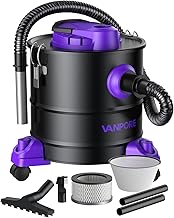
Best for heavy-duty fireplace and pellet stove cleanup. This model combines heat-resistant features with a powerful 1200W copper motor for strong suction and quick ash removal. The 5.2-gallon canister handles larger messes, while the metal hose resists heat and minimizes clogs. It can be used as a blower when connected to the air outlet, adding versatility for seasonal use. The upgraded HEPA filtration traps fine ash and dust, helping protect respiratory health.
- Best for: Frequent fireplace, pellet stove, and fire pit cleanup.
- Why selected: High power, durable metal construction, and versatile operation.
- Caution: Use with caution around extremely hot embers; allow ashes to cool before vacuuming.
Ash Vacuum Cleaner, 800W: 2.6 Gallon, Blue

Best for portable, indoor-outdoor use where a lighter unit is preferred. This 800W model prioritizes mobility with a compact 2.6-gallon canister and a heat-resistant hose. It’s suited for cleaning cold ashes from fireplaces, wood stoves, and grills, and it includes a durable filtration system to prevent ash from escaping the exhaust.
- Best for: Quick, on-the-go ash cleanup around multiple spaces.
- Why selected: Lightweight design with sufficient suction for most domestic ash tasks.
- Caution: Do not vacuum ashes hotter than advised; let ashes cool before vacuuming.
PowerSmith PAVC101 10 Amp Ash Vacuum

Best for a robust, quiet performance with a focus on clean indoor air. The 10-amp motor delivers steady suction for both warm and cool ash from fireplaces, wood stoves, and grills. Its metal hose and canister provide durability, and the unit is designed to handle repeated cleanouts without clogging.
- Best for: Users seeking a balance of power and quiet operation.
- Why selected: Reliable, purpose-built for ash cleanup with heat-resistant components.
- Caution: Ensure ash is cool before vacuuming to prevent damage to filters and components.
Ash Vacuum Cleaner, 1000W: 4 Gallon

Best for higher capacity cleaning with mobility. The 4-gallon wheeled design supports frequent cleanup with a larger bin and a powerful 1000W suction. The dual filtration system helps trap fine ash and dust, and a heat-resistant hose supports safe use around wood-burning appliances.
- Best for: Homes with multiple ash-cleaning tasks across rooms.
- Why selected: Combines higher capacity with ease of movement for versatile use.
- Caution: Avoid overfilling the canister; allow ashes to cool completely before vacuuming.
Buying Guide: Key Considerations for Wood Ash Vacuums
What should I look for in an ash vacuum?
- Suction power: Higher wattage generally means stronger suction, useful for dense ash and coals.
- Canister size: Choose based on the frequency of use and mess size; larger models reduce emptying frequency.
- Fire-resistant features: A heat-resistant hose and flame-retardant filters help prevent damage and improve safety.
- Filtration: HEPA or equivalent filtration traps fine particles to protect indoor air quality.
- Mobility and storage: A compact or wheeled unit is easier to maneuver and store in small spaces.
Should I prioritize portability or capacity?
- Portability: Ideal for quick, targeted cleanups and spaces with limited storage.
- Capacity: Better for frequent or larger ash production, such as frequent pellet stove or fireplace use.
What are common limitations to expect?
- Some models require the ashes to be cool before vacuuming to avoid damage to filters.
- Smaller units may clog more easily if ash contains heavy debris or moisture.
- Not all vacuums are suitable for hot or partially burning ashes; verify specifications before use.
How to maintain an ash vacuum?
- Regularly clean or replace filters per the manufacturer’s guidance to maintain suction.
- Empty the canister before it becomes too full to prevent strain on the motor.
- Inspect the hose for heat damage or blockages and replace as needed.
What scenarios benefit most from these models?
- Residential fireplaces and wood stoves: A high-capacity, durable model handles routine cleanups.
- Outdoor grills and fire pits: A portable unit with strong suction and heat resistance works well.
- Seasonal use: A blower-ready design can help distribute ash safely during off-season maintenance.
FAQ
- Can I vacuum hot ashes with these vacuums? Generally, only after ashes have cooled; many models include heat-resistant components but advise cooling first.
- Is HEPA filtration necessary? It helps trap fine ash particles and improve indoor air quality.
- Do these vacuums come with blower functionality? Some models support blowing by connecting the hose to the air outlet.
- What capacity is best for a small home? A 2.6 to 4 gallon canister is typically sufficient for regular, moderate use.
- Are these vacuums safe for outdoor use? Many models are suitable for both indoor and outdoor ash cleanups, depending on the design.
- How often should I replace filters? Follow the manufacturer’s guidance; if suction declines, cleaning or replacing filters is recommended.