Find the right dust collector attachment for your shop vac to keep filters clean and airflow high. This guide targets buyers seeking efficient cyclones or separators that work with standard 5-gallon buckets and common vacuums. The top picks below suit woodworkers, DIYers, and hobbyists who want fewer filter changes and better dust control. A quick product table ahead summarizes who each option is best for.
| Product | Best For | Why It Stands Out |
|---|---|---|
| Dustopper PRO | Pro hobbyists and small shops | Award-winning low-profile design with maximum separation |
| Dust Deputy Low-Pro Plus | Woodworking and DIYers on a budget | High flow, captures over 99% dust before reaching the vacuum |
| DEWALT DXVCS001 | DIYers needing versatile suction protection | Efficient cyclone for broad debris types and easy DIY setup |
| Oneida Dust Collector Kit | Woodshops needing a portable cyclone | Comprehensive kit with bucket, hose, wheels, and storage |
| DEWALT DXVCS002 | Stable, mobile setups | High efficiency with a 6-gallon tank and universal ports |
Each option below targets common buyer questions: compatibility with standard 5-gallon buckets, dust-separation efficiency, and whether a unit is better for DIY or professional use. Use the quick-scan headings to compare at a glance and then read the details for context and caveats.
Dustopper PRO: Low-Profile Dust Separator

The Dustopper PRO is designed to maximize separation before air reaches the vacuum. It’s compact and fits standard 5-gallon buckets, making it a practical choice for shops with limited space. Best for buyers who want fewer filter changes and lower running costs over time. Caution: performance depends on proper cyclone positioning and compatible hoses.
Dust Deputy Low-Pro Plus Cyclone Separator

This separator focuses on high airflow while catching over 99% of dust before it reaches the filter. It’s ideal for woodworking and DIY projects that generate fine sawdust. Best for those who want a straightforward install and strong debris separation. Limitation: may require precise setup to maximize airflow in smaller shops.
DEWALT DXVCS001 Dust Separator

DEWALT’s separator aims to boost suction and prevent clogging by filtering debris before it reaches the vacuum. It handles a range of materials from wood chips to drywall dust. Best for buyers wanting a durable, versatile unit with straightforward DIY integration. Caution: the filter system is designed for broad debris; very fine dust may require additional filtration.
Oneida Dust Collector Kit with Clear Bucket
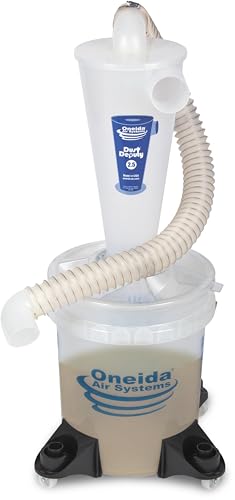
This kit offers a portable cyclone system with a clear bucket, wheels, and storage. It’s best for users who want a complete, ready-to-assemble setup that’s easy to move around a workshop. Limitation: may be bulkier than ultra-compact options and requires space to roll and store.
Oneida Dust Deputy DIY Anti-Static Retrofit Cyclone

The Dust Deputy retrofit uses neutral vane technology to improve efficiency and prolong filter life. It’s suitable for installations that want a robust, long-term solution across multiple vacuum models. Best for seasoned hobbyists or shops with older vacuums. Caution: installation may require compatible adapters and hoses beyond the basic kit.
DEWALT DXVCS002 Dust Separator

This model combines a 6-gallon tank with a high-efficiency separator and standard port options. Best for users who need stability and a larger debris capacity in a mobile setup. Limitation: larger footprint compared to ultra-compact options; plan for storage and transport inside a workshop.
Vacmaster Beast Series Wet/Dry Vac

Though primarily a vacuum, it’s included to illustrate high-capacity suction and compatibility with compatible dust separators. Best for buyers who already own a Vacmaster Beast and want to enhance debris separation. Caution: not a standalone cyclone but pairs well with compatible accessories for better separation.
CRAFTSMAN CMXEVBE17250 Wet/Dry Vac

CRAFTSMAN’s portable 2.5-gallon vac with basic accessories offers a compact option for light messes. Best for simple, everyday cleanup in the home or car shop. Limitation: smaller capacity and fewer integrated dust-separation features than dedicated cyclones or separators.
Buying Guide: Key Purchase Considerations
What is your primary use case? If woodworking dust is your main concern, prioritize separators with high separation efficiency and compatibility with 5-gallon buckets. Do you need portability? Look for kits with wheels and handles. What vacuum models do you own, and what ports are standard? Ensure compatible diameters (e.g., 2.0″ to 2.5″). How much space can you dedicate to a cyclone setup? Space affects your choice between compact and full kit options. Is ongoing maintenance important? A design that reduces filter and bag replacements saves time and cost over years. Consider debris types: dry wood dust, drywall dust, concrete dust, and fine powders may require different filter strategies. Finally, verify installation ease and whether the unit includes hoses, gaskets, and accessories for a quick setup.
FAQ
- What is a dust separator and why use one? A dust separator captures dust before it reaches the vacuum filter, reducing clogs and extending filter life.
- Will these work with any wet-dry vacuum? Most are designed for standard 5-gallon buckets and common hose sizes, but check port diameters.
- Are cyclone separators better for fine dust? Yes, cyclone designs generally provide better separation efficiency for a wide range of debris.
- Is there a risk of reduced suction with a separator? Some loss of suction can occur if the setup isn’t optimized; proper installation helps minimize this.
- Should I buy a full kit or a retrofit separator? Full kits offer easier setup; retrofit options can be cost-effective for existing vacuums.
- How do I know which is best for woodworking? Look for high separation efficiency, compatibility with 2.0″ or 2.5″ hoses, and a bucket-compatible design.